
Every Child Achieving and Thriving: what the new DfE white paper means
By Adam Goodbody
Chief of Staff
A major education white paper has just come out from the government.
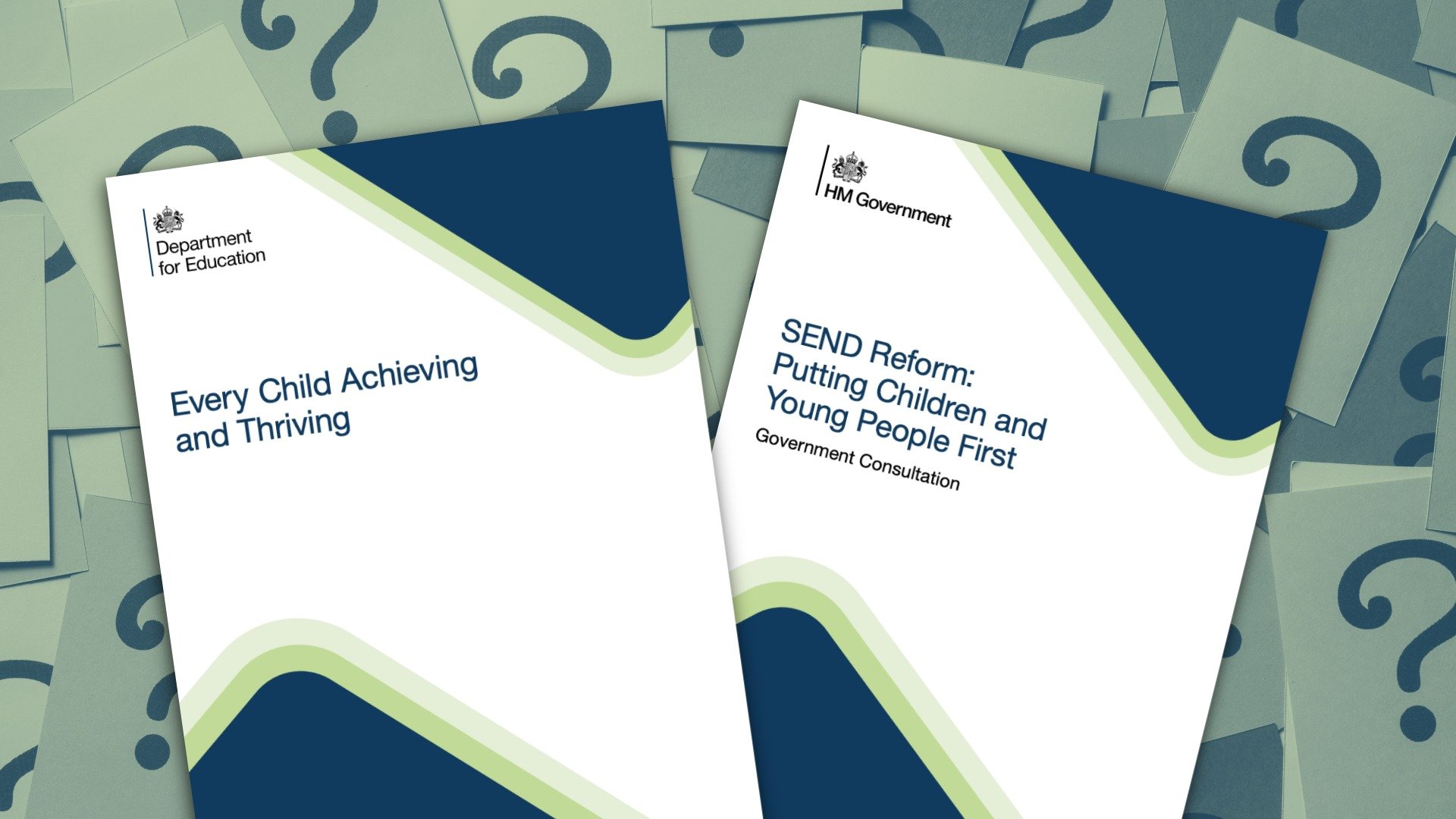
If you have a child in school, or even if you don’t, it is worth having a look here to see what it might mean for you. Otherwise, I have done my best to summarise it below. Every Child Achieving and Thriving is probably the government's most ambitious statement about the future of schooling in England in a generation. It covers curriculum, inclusion, teacher recruitment, attendance, SEND and more. It runs to 118 pages! Most people will not read it so here is what you need to know.
What problem is the government trying to solve?
The white paper begins with a focus on attendance.
Around one in five children is missing a day of school every fortnight. The number of children who say they feel they ‘belong’ at school has also fallen sharply. The disadvantage gap, which was closing in the early 2000s, stopped closing before the pandemic and has not recovered. Particularly, white working-class children, children with SEND, and children from the most deprived communities are being failed consistently and repeatedly.
In essence, the white paper's response is built around three shifts. From “narrow to broad”. From “sidelined to included”. From “withdrawn to engaging”. Each shift is given its own chapter.
What are the headline ambitions of this white paper?
The government has set two long-term targets for when children currently starting school complete secondary education.
First, on average across the system, “children will leave school achieving a grade 5 or above across their GCSEs”. That is a big change from where the system is today.
Second, the disadvantage gap will be halved. Children from lower-income backgrounds will achieve around a full grade higher in each of their GCSEs than they do today. That equates to “1.3 million grade improvements and over 30,000 more disadvantaged children passing English and maths each year”.
By the end of this Parliament, the government also expects:
75% of five-year-olds reaching a good level of development in the Early Years Foundation Stage
90% of children meeting the expected standard in the Year 1 Phonics screening check
Around 25,000 more children leaving primary school with strong foundations for secondary school
Children attending what equates to 20 million more days of school per year than in 2023/24
A broader curriculum and an enrichment entitlement for every child
This is the section of the white paper that I find most interesting given my background in the performing arts.
For years, the narrowing of the curriculum has been one of the most troubling trends in English education. Schools have faced pressure to focus on the subjects within the EBacc. Enrichment, creative subjects and wider opportunities have increasingly been seen as ‘extras’ rather than essentials.
The white paper commits to an enrichment entitlement for every child, not just those whose parents can afford to pay for it. It commits to a refreshed National Curriculum built on the independent Curriculum and Assessment Review, designed to be knowledge-rich and genuinely broad. It signals that the accountability system will evolve. Progress 8 (which is a metric for assessment at Key Stage 4) will be updated to recognise a fuller range of achievements.
To me, and many other people across the U.K, enrichment is not a ‘nice-to-have'. It is how young people discover what they are good at, build confidence, and develop into rounded people. A system that treats it as ‘optional’ is getting something fundamentally wrong.
It is good to see a clear commitment from the government on this ‘widening’. This is central to the Oppidan ethos too.
SEND reform
The SEND section of the white paper is the most detailed and, for many families, the most significant. It has garnered most of the headlines so far in the news coverage.
Now, more children are currently being educated in specialist settings than at any point in the last half century. Too many families have spent years “fighting” for support that should simply exist. The system as it stands is not working for children, for families or for schools.
So, the government is proposing a genuine reset. The key commitments are:
A £1.6 billion Inclusive Mainstream Fund over three years to identify needs early and meet them consistently
A new £1.8 billion Experts at Hand service, bringing speech and language therapists, educational psychologists and other specialists into mainstream schools
New Specialist Provision Packages: nationally defined, evidence-based support plans for children with the most complex needs, forming the basis for future EHCPs
£3.7 billion invested by 2030 in accessible buildings, new special school places and tens of thousands of new inclusion bases in mainstream settings
The vision is an inclusive mainstream system that genuinely works for far more children, alongside high-quality specialist provision for those who need it. A consultation, SEND Reform: Putting Children and Young People First is published alongside the white paper.
Whether this pledged investment translates into real change on the ground remains to be seen.
6,500 more teachers: the delivery plan
The white paper is published alongside a separate 6,500 Additional Teachers Delivery Plan, which sets out in detail how the government intends to grow the teaching workforce over this Parliament. This was a big ‘headline’ pledge made by Keir Starmer at the last election.
The focus is secondary schools, special schools and further education colleges. Primary schools are not in scope, because as outlined, primary pupil numbers are falling, and trainee recruitment has been strong.
The early signs are encouraging. The secondary and special school workforce grew by 2,346 teachers between 2023/24 and 2024/25. School teacher pay has risen by nearly 10% since this government took office. Teacher vacancies are at their lowest level for five years in secondary schools. Around 17,000 new postgraduate entrants began secondary teacher training in 2025/26, an 11% increase on the previous year. Across STEM subjects where vacancies are always lower, new trainee numbers are up 21%.
The delivery plan for teacher recruitment works across three areas:
Attract
Optimising routes into teaching to reach a broader range of candidates. Bursaries and scholarships worth up to £31,000 tax-free. There will also be better digital tools for candidates who have not yet secured a place.
Retain
Reducing workload, improving wellbeing, expanding flexible working and ensuring fair pay. Teacher leaver rates have fallen to 9%, the lowest since 2010. More teachers are returning to state schools than at any point in the last ten years.
Develop
Expanding career-long professional development so teachers can deepen expertise, pursue specialisms and move into leadership. A new Teacher Training Entitlement is included. Over £200 million over three years for SEND-specific CPD.
What this means for your child's school
To be honest, there is so much language in this document it feels somewhat impenetrable. It doesn’t feel like it has been written for parents sitting at kitchen tables wondering whether their child's school will be better next year than it was last year.
If your child has SEND or additional needs, this white paper should mean earlier identification, better-trained teachers and faster access to specialists without having to “fight” for every scrap of support. It will obviously not happen overnight, but the investment behind these commitments is real.
If your child is in a school with high levels of disadvantage, this white paper should mean more targeted funding, stronger school leadership and a concerted attempt to close the gap in outcomes that has been widening for too long.
If your child is doing well but capable of more, the white paper explicitly addresses this too. Stretching pupils who are progressing but capable of more is named as a priority. The enrichment entitlement matters here as well.
For all children, the shift towards a broader curriculum and an enrichment entitlement for everyone is significant and something I am very excited about, or perhaps cautiously optimistic!