The Communication Journey
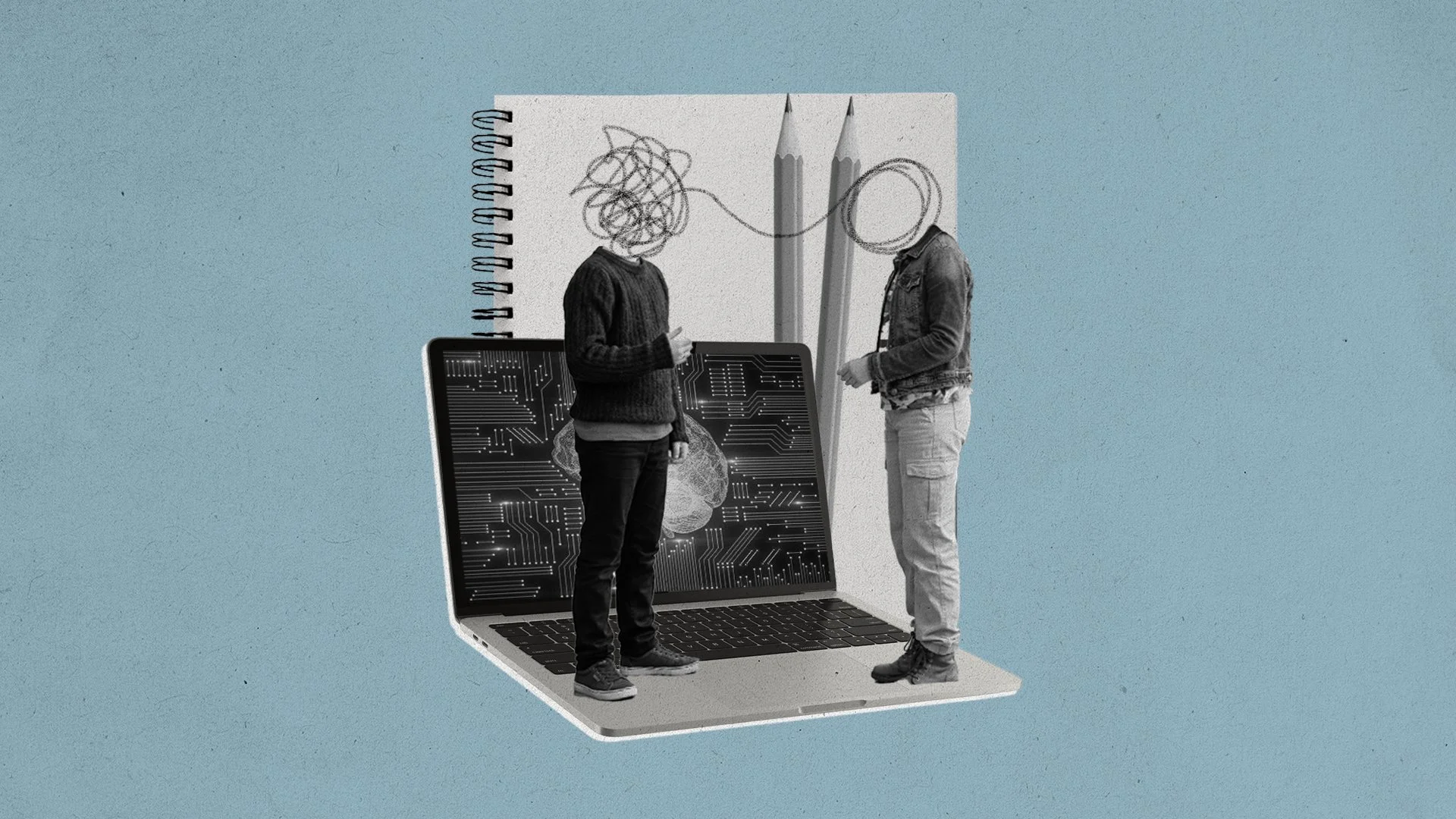
We've designed a new journey: the Communication Journey. Here’s what your child will get from it and why it matters now more than ever.
Two questions for you, the reader.
Think about the last time your child struggled to hold a conversation with an adult in the room. Or came home frustrated after a group project because nobody seemed to listen to each other. Or sent a message that landed completely wrong.
Now think about the world they're growing up in, where AI can write their essays, answer their questions, and even carry on conversations on their behalf. What, exactly, is left that makes a person irreplaceable?
The answer, we believe, is human communication. And it turns out that very few young people are ever explicitly taught how to do it well.
Why now?
The world's most innovative organisations are already are already moving beyond traditional markers of success. Academic achievement alone no longer guarantees real-world impact. The qualities that stand out are increasingly rare and, therefore, increasingly valuable: the ability to connect genuinely with others, to listen deeply, to argue a position with clarity and humility, to communicate across generations and contexts.
In the meantime, young people are spending ever more of their communicative life on screens, where tone disappears, nuance gets lost, and the shorthand of emoji can mask gaps in genuine communication ability. The risk isn't just that they communicate less well in person. It's that they're losing the tools to communicate at all.
As our programme manifesto states: "In an era where artificial intelligence reshapes entire industries overnight, young people need more than technical knowledge. They need to become a polished, better version of themselves in the context of our current world, one where human connection matters more than ever."
So what is the Communication Journey?
The Communication Journey is a 12-session, one-to-one mentoring programme designed for young people aged 11-14. Each session runs for 60 minutes and follows the Oppidan Model, our structured framework refined across a decade of work with over 10,000 students worldwide.
Session order is flexible, with your child’s mentor strategically sequencing them to match your child’s needs. What stays constant is the structure: every session opens with a game or discussion to get your child thinking and talking, moves into a core activity that teaches the skill directly, and closes with ten minutes of reflection, goal-setting and feedback. Each session is designed to deliver a practical skill your child can use straight away in conversations, at home, in the classroom and beyond. Progress isn't just made. It's noticed, by your child and by you.
What skills will your child learn?
-
The first sessions establish the foundations: what makes a good conversation, why listening is harder than it sounds, and how to make someone feel genuinely heard before you respond. Students work with Paul Grice's cooperative principle, the philosophical framework behind what makes communication feel collaborative rather than like two people talking past each other.
-
Your child already has a voice. These sessions help them find and use it. Through a communication style self-assessment and an origin story exercise, students develop the confidence to contribute to a conversation, introduce themselves naturally rather than in a rehearsed way, and articulate who they are and where they come from. These skills matter as much in a school interview as they do with a new group of friends.
-
Two sessions are dedicated to the specific challenges of digital communication: what gets lost when voice disappears, how to choose the right medium, and how to interpret tone in text. A further session focuses on AI, not just how to use it, but how to think critically about what it produces, how to prompt with intention, and where a skilled human communicator can still do what AI cannot.
-
These are the sessions parents often tell us they most wish they'd had themselves. Your child will learn how to argue a position clearly and calmly, how to separate the idea from the person, how to find common ground in a disagreement, and how to stay composed under pressure. These aren't just school skills. They're life skills.
-
Session 11 brings everything together in the context of high-stakes communication, whether it's a school interview, a presentation, or simply a moment where your child needs to perform at their best. They'll work on four core interviewing skills: understanding and articulating their strengths, owning their weaknesses, pivoting in conversation, and giving precise, well-evidenced answers. The session closes with a mock interview run by their mentor.
What does a typical session look like?
Every session follows the same six-part structure, which means your child knows what to expect and mentors can focus on the learning rather than the logistics.
It opens with a game (five minutes to introduce the concept in a low-stakes way), moves into discussion (an open question with no right answer, the goal being to get your child talking), then works through the session objectives and a core activity. For students ready to go deeper, there's a "Level Up" extension.
Every session ends with ten minutes of reflection: your child teaches something back to their mentor, checks the objectives, sets a mission for the coming week, and gives their mentor feedback.
That last part, your child giving feedback to their adult mentor, is deliberate. It gives young people a genuine sense of ownership over their learning.
What you’ll see as a parent
You'll receive a detailed report from your mentor after every session, so you can follow their progress as it happens.
Progress is also measured more formally: at the beginning and end of the programme, your child completes a short self-assessment with their mentor, rating themselves across ten key communication traits. This provides a simple but powerful way to track development over time.
By the end, the difference is clear. Students who once questioned their abilities leave with confidence, self-awareness, a strong understanding of their own communication style, and how they can continue to improve.
Is this the right programme for your child?
This programme is about helping a child find their voice. It’s designed for students aged 11-14. It's not about fixing a problem; it’s about developing skills that every child can benefit from, and which will serve them for life.
The programme is designed for anychild who would benefit from developing their communication skills, building confidence in conversation, and learning how to show up well in the moments that matter.
If you'd like to find out more, or you'd like to talk to someone at Oppidan about whether the Communication Journey is the right fit for your child, we'd love to hear from you.