
When is a school too strict?
By Anya Davies, Founders’ Associate
Last December, a school in Hackney became the first in England to be the subject of a safeguarding review triggered by complaints about its behaviour policy.
Mossbourne Victoria Park Academy is an impressive school: it is non-selective, nearly half its pupils are on pupil premium, one in five has special educational needs, and yet in 2023 Ofsted rated it outstanding in every category. Its GCSE results are remarkable: 81 per cent of grades at 5 or above.
It is also strict, and unashamedly so. Parents are asked to sign the behaviour policy before their child starts.
The recent safeguarding review, led by Sir Alan Wood, concluded that the school's success had come at too high a cost for a substantial minority of pupils. A separate review, commissioned by the school's own trust and led by Anne Whyte KC, was more measured, but found the same gap between the school's policy and its practice. The school disputes the findings and the Department for Education's own behaviour adviser also publicly dismissed the review.
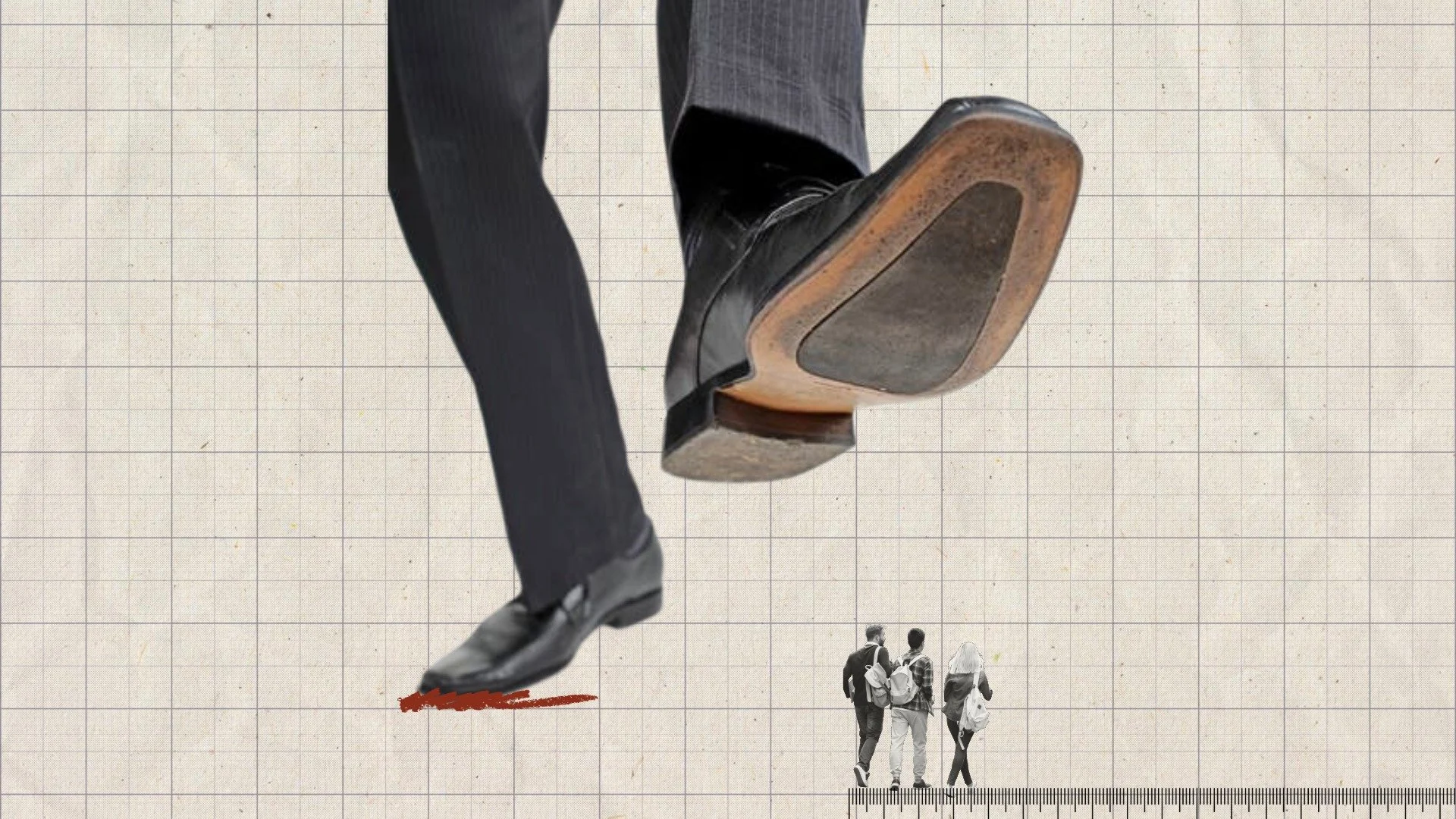
But beyond the specifics of this case, the question this first-of-its-kind review raises is a wider one. When is a school too strict? Where is the line and at what point is it crossed?
The strict end of the spectrum
Cross London from East to West and you find Michaela Community School in Wembley, regularly referred to as the strictest school in Britain. Silent corridors, demerits for small infractions, detentions for forgetting a pencil. Year 7 pupils spend their first week explicitly practising the school's routines for silence, entrances, exits and even toilet breaks.
Katharine Birbalsingh, who founded Michaela in 2014, has made the argument for her approach for a decade. Her case is that structure is not the opposite of kindness: that clear rules protect the quietest child in the room, and that children from the least advantaged homes are the ones most failed when a school lets structure slip. Ofsted graded Michaela outstanding in every category in 2017. In 2022, almost 75 per cent of its GCSEs were graded 9 to 7.
Beyond the school's explicit severity, however, lies a crucial detail. Michaela's published behaviour policy runs through demerits, detentions, referral and exclusion in forensic order. Then, near the end, it has a short section headed 'Discretion': an acknowledgement that no behaviour policy can cover all eventualities, and that the Headmistress reserves the right to depart from it. The strictest school in the country writes the exception into the rules.
The soft end of the spectrum
Drive ninety minutes south to Hampshire and you find Bedales, founded in 1893 as a deliberate alternative to strict schooling. There is no uniform and everyone addresses each other by their first name. The school became so dissatisfied with GCSEs that it built its own qualifications, ‘Bedales Assessed Courses’, to sit alongside a core of IGCSEs. Pupils farm, build, cook and make things. The school describes itself as "disciplined but not rule-bound" and "relaxed but respectful".
In Letchworth Garden City, meanwhile, St Christopher has been doing something similar since 1915. No uniform, first names throughout, an entirely vegetarian dining hall, and a school council where pupils genuinely shape how the place runs. The belief underneath is that every voice, from the youngest child in the nursery to the chair of governors, should be listened to.
Neither school sees themself as a ‘soft option’, however. Read their own words and you find the same insistence on high standards, simply with a different approach. Their case is that a child who is trusted will meet expectations because they want to, not because they fear what happens if they don't.
That bet pays off for a great many children, but not for all. A child who needs clear scaffolding can drift badly in that freedom; a lack of structure can be every bit as detrimental as strict rigidity.
The discretion question
Line these schools up and you have a spectrum: Michaela at one end, Bedales and St Christopher at the other, Mossbourne somewhere near the strict end.
If it were a question of ‘too strict’, then, it would be Michaela that would be the school in trouble. Michaela's discipline is, if anything, tighter than Mossbourne's. Silent corridors are stricter than anything in Mossbourne's policy.
What separates the two is not severity, but the frameworks that exist around that severity.
Mossbourne's own behaviour policy does suppose a certain amount of discretion in its application. Or so it would seem from its section "Taking Account of Individual Student Needs; Rigidity with Flexibility". It lists the pupils whose circumstances staff should particularly note: pupils with disabilities, with SEND, with medical conditions, young carers, children from families under stress.
Yet both reviews into Mossbourne found the same gap between that section of the document and what happened in practice. KC Whyte heard from around 30 parents who said that when they tried to discuss a sanction, they were met with a version of "that's the Mossbourne way". Parents told her repeatedly that rigidity trumped flexibility, to the point of dogma. Wood, working separately, found a culture of "no excuses".
So, two separate reviewers and two separate commissioners came to the same overlapping finding: the issue is not with the rules, but rather with the lack of exception. On paper, Mossbourne's provision for discretion is generous – arguably more so than Michaela's, which amounts to a single sentence reserving the Headmistress's judgement. Mossbourne's is a whole section naming the pupils whose circumstances staff should weigh. It’s instead a question, then, of policy versus practice.
Self-proclaimed ‘strict’ schools – what questions should we be asking them?
So, what questions should we be asking to glean whether a school’s practice matches its policy?
Ask a head what happens when a child breaks a rule for a reason. The interesting part is not the sanction but the process behind it: who is allowed to make an exception, and how often do they?
Ask how they tell the difference between a child who will not do something and a child who cannot.
Ask how the behaviour policy sits alongside their SEND provision and ask for an example rather than a principle.
Ask whether anyone looks at who is being sanctioned. Are the school aware of patterns that the data reveals?
And ask what a child does if they think a sanction was unfair.
None of this is about finding a soft school. It is about finding one that can tell you what they do when they come across a child for whom their approach doesn’t work, rather than one that believes there aren't any such children.
What good schools have in common, strict or not
We work with schools right across the spectrum of strictness and on the surface and they look nothing like each other. Some have silent corridors and strict punishments; others have first names and no uniform.
A school can be strict or gentle, traditional or progressive, and it can hold its philosophy with real conviction. What it must not do is apply that philosophy without judgement. Rules are how a school treats eight hundred children fairly; discretion is how it treats one child properly. A good school needs both and the second one is harder, because it means being able to look at a child in front of you and judge that this time, the rule does not fit.
Sources: Local Child Safeguarding Practice Review, Mossbourne Victoria Park Academy, Sir Alan Wood CBE, December 2025 (City & Hackney Safeguarding Children Partnership); The Mossbourne Review, Anne Whyte KC, November 2025; Michaela Community School Behaviour Policy, September 2025; Bedales School and St Christopher School published materials.