Human Maxxing: Q&A with Peter Hyman
The Oppidan Lecture, Royal Society of Arts, 22 September 2026
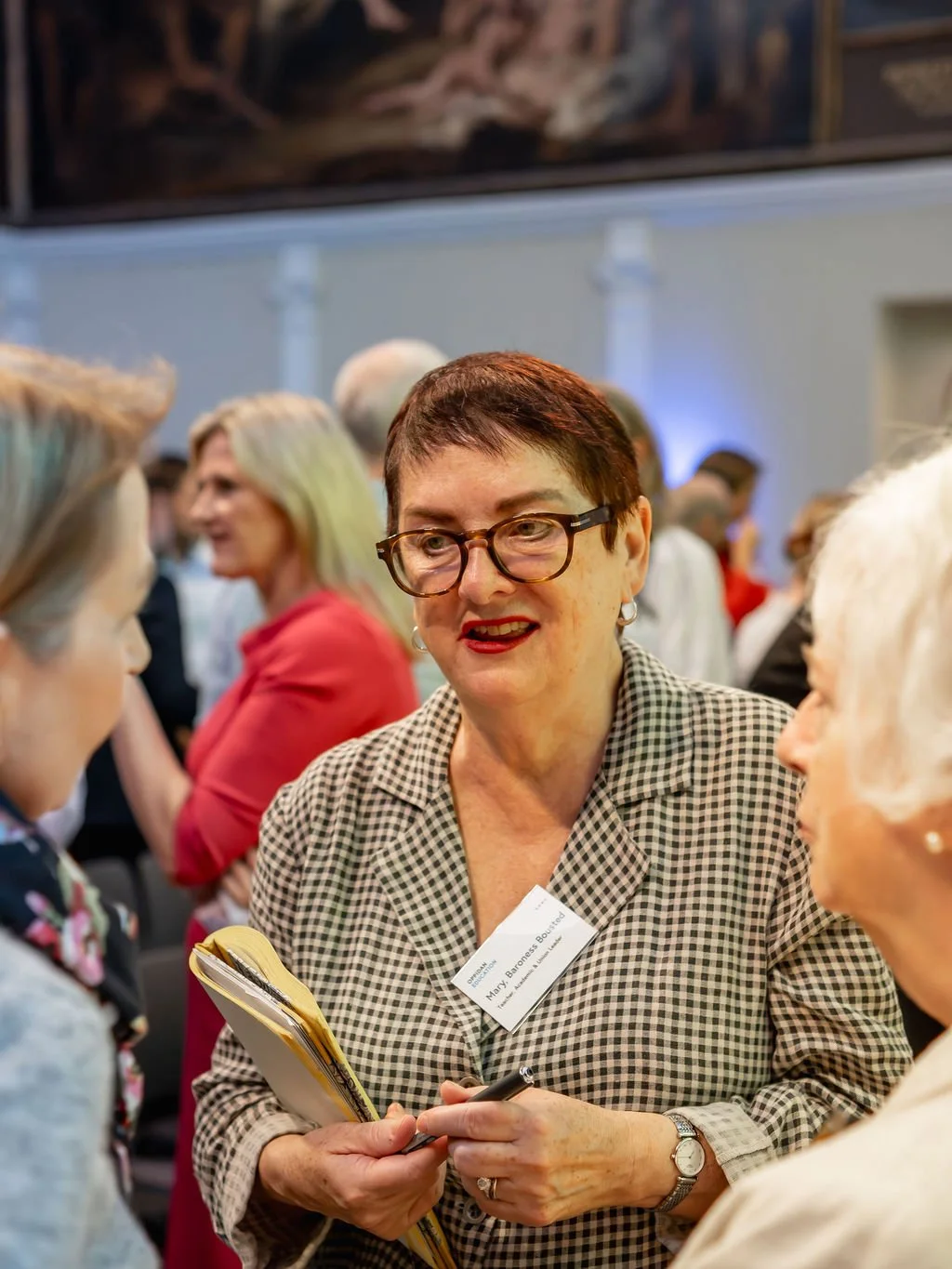
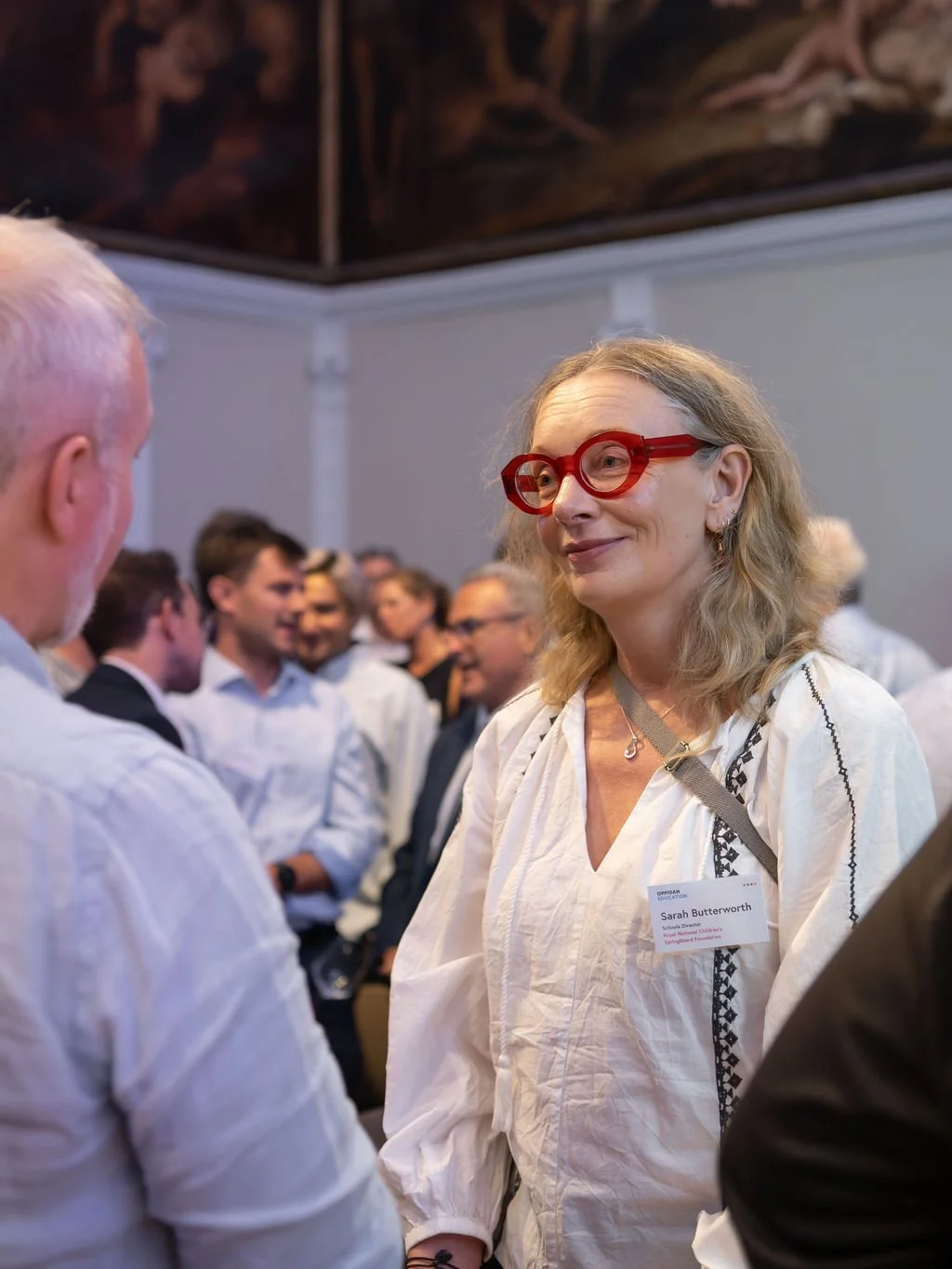
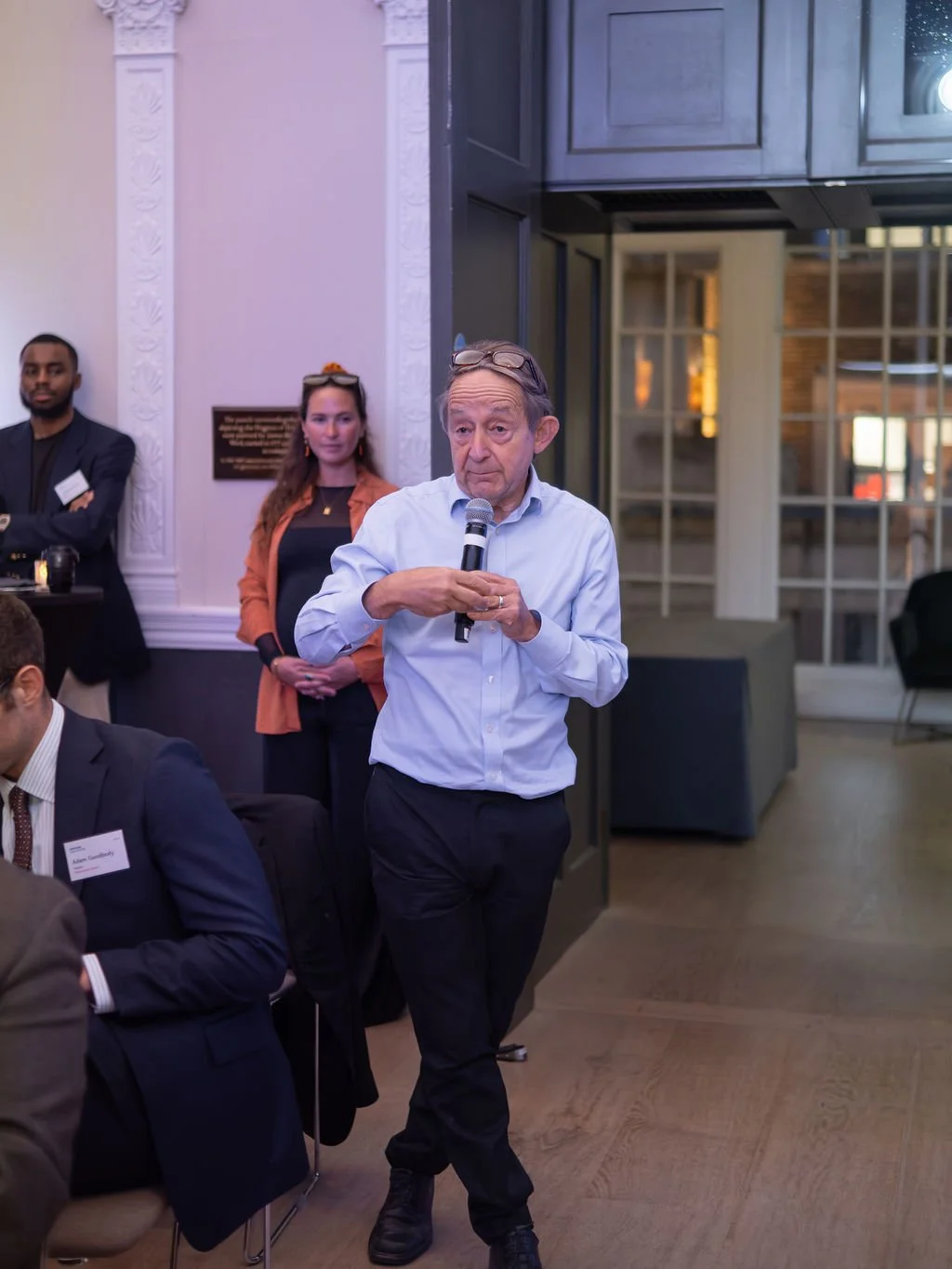
Sir Anthony Seldon: The question is: is it going to happen? Does Lucy Powell love it? Does Laura Trott love it? Does Suella Braverman love it? Peter, how is this going to happen? How does this transition work? Because that's the question.
Peter Hyman: It's always difficult, and the point is that you need to build a coalition to make these things happen. As I said at the end, not everyone will agree with what I've said here. But there is a growing movement of people who can see that the world is changing so fast, not least because of the AI imperative. That doesn't mean we throw everything out in schools. In some cases, going back to what I was saying about not outsourcing our minds, we've actually got to double down on some of the foundations of what you might call a more traditional education. So it's complex. I've never liked the traditional–progressive divide, because it's a sort of absurd argument, but the future will actually be a really interesting combination of some of those themes. I think we can bring everyone along, if we do it in the right way, to the view that something has to change, but that it's not about throwing out everything we know works or has been successful. Whether it's business, educationists or parents, there is an appetite for change.
Sharath Jeevan: My book is all about legacy, helping groups think about the long-term future. I've just come back from Singapore, where the government has tried a lot of things. They didn't use the word “human”, but they tried many of the things you talked about, and they've tried very hard. Parents have been one of the main stumbling blocks there. You mentioned the phrase “cognitive dissonance”. Parents are seeing this in the real world. They're seeing their jobs change. But something is holding them back, and they want to keep the world the same. In these coalitions you mentioned, how do we get parents to reimagine this with us?
Peter Hyman: I think it needs a lot of explanation. To give one small example, at School 21 I wanted every young person to go out into the world of work every single week, not to do some hopeless two weeks of work experience photocopying. It was part of their diet. But I had to persuade parents that this was worth doing instead of an extra GCSE, which is quite hard in an area where qualifications mattered so much to parents. We did persuade them, and they saw the value of what the young people were doing by having a more varied diet in their school week. That's one small example, but it shows it's doable. It just needs lots of explanation.
The trouble with schooling, and this is true of secretaries of state and ministers as well, is that everyone refers back to their own schooling. The worst example I can remember was a Secretary of State, whom I won't name (you might be able to guess, although the last regime had many, many Secretaries of State). He had gone to a Catholic grammar school, and his first utterance as Secretary of State was that we need more Catholic grammar schools. That seemed to me utterly bizarre. There may be a case for them, but still. That's the problem with parents as well: they refer back to their own education. As educationists we all know this. I'm not belittling parents, but when most parents spoke to me, their litmus test of a good school was the quantity of homework their children were given, which would not be our litmus test of a good school. So that's a long way of not answering your question, which is that it's actually quite hard.
Walter Kerr: A challenge from me. You told me on the podcast that the measure of a good education is what that young person is doing, feeling and thinking at 25. The NEET report is clearly a provocation on that. The other side of the coin, to go with Sharath's question, is that parents look at the success of Michaela, Mossbourne and Mercia in the north of England, see fantastic results, and think these are the badges, the qualifications, that their children need to get on in life. Is it as binary as either/or, or can the system work for both?
Peter Hyman: Well, I referred to PISA, of course. A lot of people have worked incredibly hard to get the basics of English, maths and science right, and we'd be mad to think that's not a good thing or that we need to throw it out. Of course we don't. It's absolutely foundational. School 21 was founded on the English language; that was the centrepiece of everything we did. So you've got to have that as the basis, and you shouldn't water it down.
All I would say is that the evidence from the States is this. Over time, hothousing purely for good exam results can backfire. When those young people become more independent, they no longer have someone on their back, which a lot of these schools do incredibly heavily. When they're out in the world having to make choices and judgements and weigh up things that aren't spoon-fed, some of them fall apart, because they're just not used to it. That's why I say the test isn't whether you got the best GCSEs in the country, although again I'm not belittling that. It's what the young person is doing at 25, and whether they're equipped to thrive in the world.
Dame Alison Peacock: I'd say there is cause for optimism. Just last week I went to an event in the House of Lords for the Key Stage 3 Alliance, a collective of teachers, school leaders and policymakers. There was a shared ambition to look at our curriculum: how can we make it more meaningful, how can we make sure our children are challenged, enjoy school and want to be in school, and how do we do that by learning from and with each other? That, of course, is at the heart of the Chartered College. I feel there is real strength in that democratic engagement by the profession, and we need more of it. We need less telling people what to do, and more of a profession that really listens to the kinds of things you're talking about while also responding to the needs of their own communities, children and situations. So there is at least some cause for optimism.
Peter Hyman: I think there's huge cause for optimism. What's been missing from this government and previous ones is the realisation that everything stems from the hold of the exam system. If you don't loosen that, then with the best will in the world, and I love what people are trying to do at Key Stage 3, my fear is that we know it's a five-year treadmill in a lot of state schools. If the accountability and the onerous nature of GCSEs remain, then at Key Stage 3 you'll still have one eye on whether it's building up to the results, rather than on how to provide the richest education. So I think we need to address the exam system as well.
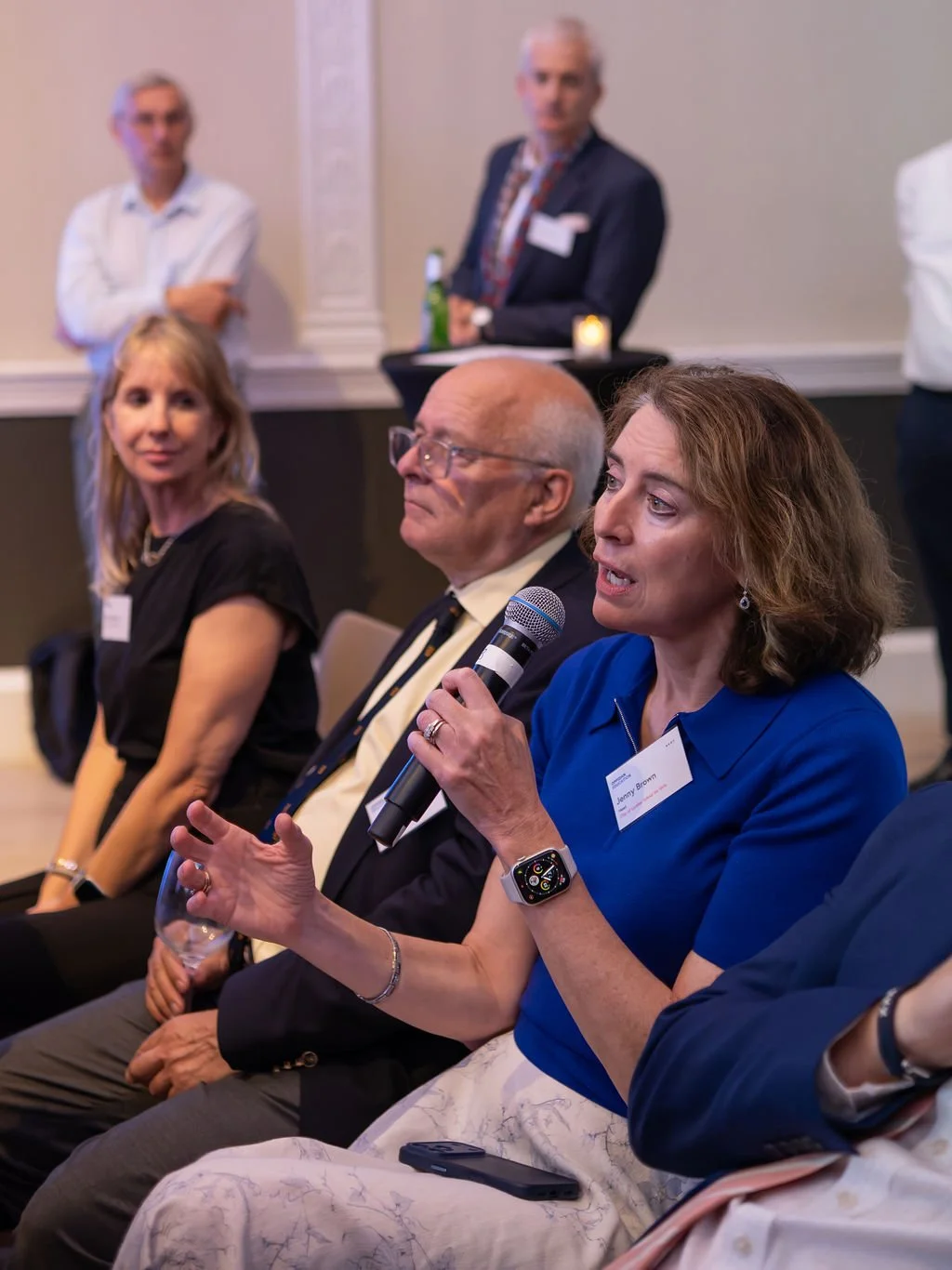
Jenny Brown: Your talk was such a clarion call for hope and for courage. I would love to hear from you that there is this kind of courage and leadership in government. But the government seems so hidebound by compliance, and probably isn't feeling much agency either. It seems rather fatalistic, in a world where AI feels like it's running ahead of everyone. So where do we look for that courage and leadership, and how do we find it?
Peter Hyman: There are many complaints about the DfE, some of which I share. It's about being measured, and that's really tricky to get right. Politicians have to move at some pace here. We can't just say that the profession always wants change to be slow and gradual, because this is a bit of an emergency, if you can have a bit of an emergency. So we need to get on with it. But we also don't need spasms where we suddenly decide to lurch in one direction and disrupt everything. It's got to be thought through, it's got to be measured, and it's got to take the profession with it. That's a fine balancing act, and it isn't easy at all, but it's what we've all got to help the government get right. That doesn't mean resisting change. It means making change better, deeper, more long-term and more workable, because we're the ones who know what will and won't work.
Will Goldsmith: As someone who has campaigned for reforming assessment, and has seen, I would argue, the demise of Rethinking Assessment, one of the campaign groups that does that, I'm slightly cynical about wholesale change. My question, though, is this: if you were Secretary of State for Education, what three policies would you enact in pursuit of this?
Peter Hyman: I've mentioned some of them. There were two in my talk that are small in some ways but symbolic. The first was comparable outcomes, which we just know makes no sense, with a third of students failing every year. The second sounds a bit nerdy, although we're in a room of education nerds: the Extended Project Qualification. I think it's a symbol that everyone should do their own personal project, one that requires initiative and that they can properly research. If you did it at three levels, with one at the end of primary so you're not just doing SATs, one in the middle of secondary and one in sixth form, and it was properly taught so that students became better independent researchers, I think it would make a huge difference.
And actually I did mention a third one, which was the 14–19 changes. I went to interview Mike Tomlinson, whom some of you will know, who wrote the big report for the government that was shelved. A lot of people, including me, as someone who was part of that last Labour government, think shelving it was a huge mistake. It was trying to bring technical and academic together, not as an either/or, but saying that everyone needs some of both, and you can turn up some and turn up others. It was a way of not continuing to have this messy divide. So I think those three things are really, really important.
Walter Kerr: Just one from me: what is the barrier, then, to the Tomlinson report?
Peter Hyman: The barrier is imagination.
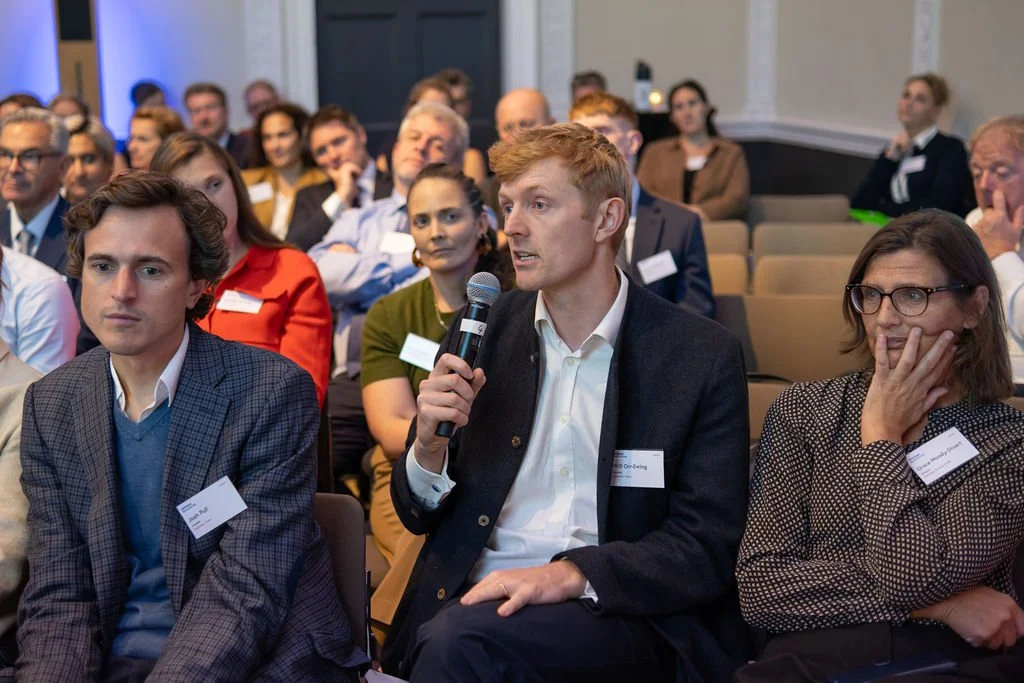
Will Orr-Ewing: You asked for criticism, so I thought I'd be the token critic in the room. I really agree with the principles of Human Maxxing, but the sector that has most embodied Human Maxxing for a long time is the independent sector. As an architect of the 2024 election and the manifesto, do you have any pause for thought about the damage that's been done to that sector, and to the principles you so clearly share?
Peter Hyman: If you're referring to VAT, that's not particularly what I was talking about. We can have a debate about VAT, but that may dominate things. In a sentence: you've always got to make choices, and at a time of massive shortages in the state sector there was a case for saying there shouldn't be a tax relief for the independent sector. In my view that shouldn't be taken as a full-on attack on the independent sector, although I accept some people see it that way, but that's the rationale.
You said the independent sector embodies some of this, and I think it does. But my challenge to the independent sector, as I said at the end, is that there is sometimes a complacency. Because you've got such good enrichment, the playing fields, the theatre, the orchestra, somehow that counts as Human Maxxing. Those are all brilliant things, but my challenge is: is there real agency for your students?
I've always thought that, because of the intake of a lot of independent schools, they are a lot less imaginative than the state sector, which has to cope with the variety and the inclusive nature of its intake. Independent schools can actually push the boat out. I remember a colleague of mine, one of the founders of School 21, who was advising Eton. What he said to them was: when you get them in Year 9, you don't need to start them on GCSEs. It's absurd; they're all passing with flying colours. Take them away to a forest in Scotland for a year, or somewhere else, and get them doing things that genuinely expand their horizons. There was no appetite for that. There wasn't a sense of “we can afford to do something completely radical, something that's Human Maxxing, with those Year 9s.”
Baroness Mary Bousted: I'm Chair of the Teaching Commission. Our latest report looked at the 2028 curriculum review, chaired by Becky Francis. In the course of that, we also looked at the SEND reforms, and at the end we looked at vocational education and the new vocational routes. Our concern was that those three policies don't cohere. My sense is that the government is looking at the right things: broadening the curriculum, bringing in the hand and the heart, and making our schools more inclusive. But if you keep the stranglehold of exams, and a very conservative (with a small c) 2028 curriculum coming out of the Curriculum and Assessment Review, then you simply make it more difficult for the system to achieve those aims. My last point is that if the curriculum isn't inclusive, then getting more children with SEND into schools to take a curriculum and exams that are too exclusive will make things more difficult for the profession, and more difficult for all of us to find a way through. So my question is: do you think there's that realisation in government and in the DfE?
Peter Hyman: Again, it goes back to how hard it is to make change, and this requires more boldness. The current paradigm, which I used to call Paradigm A, has a logic to it. Exams are the focus, the curriculum is knowledge-rich, you cram people for exams as the proof of it, Ofsted gives you a badge for it, and teachers teach to those exams. There's an internal coherence. If you want to move to a more expansive, Human Maxxing curriculum and approach, you've got to have a broader curriculum, a bigger repertoire of pedagogies, and an Ofsted that inspects different things. That has its own internal logic. The trouble with picking one piece out of the first paradigm is that critics say you're lowering standards in one place while nobody quite knows what's happening in the other. So how you get from A to B is what I've wrestled with, and what a lot of you will have wrestled with, for a long time, because you can't just have a big bang. You need to paint the picture of B, and the pathway to it, in order to make it credible. I think that's the answer to what you're saying, and it requires a lot of thought about how best to do it.
Jesse Elzinga: I'm Headteacher at a school down in Kent. It's a very confusing time for parents. On the one hand, they want the academic results. I spent some time over the weekend with people from the Alpha Schools in the US, who are making lots of waves. They do two hours of AI tutoring online and say the ROI on your child's brain is ten times better than what a normal school in England can achieve in six hours. When private equity people start talking about the ROI on a child's brain, it gives me the heebie-jeebies. On the other side, I love Human Maxxing and I'm completely with you. Let's make a really interesting curriculum. I really believe in the co-curriculum: young people learn so much through sport, the arts, CCF, the Duke of Edinburgh's Award, debating and chess. They're learning all these human skills of communication and resilience. So my question is: how do I reassure parents that the right thing to do isn't to give their children an AI tutor or more screen time, but to be more human, through Human Maxxing? Because our parents are really confused.
Peter Hyman: A couple of things. I think you're right about everything you've said. As I said earlier, there's this almost binary divide. We all know, and it's true in independent schools as well as state schools, that the hold of the single-subject specialist is very strong: the historian, the geographer, the mathematician. They often teach in the way they've taught for 20 or 30 years. I think the compromise, which I particularly see in independent schools, is a very traditional daytime curriculum, with enrichment that hooks young people in and gives them something else. But we've got to address the daytime curriculum as well as the co-curricular. We've got to do what my challenge was about: giving more autonomy and agency, and the ability to build up judgement, within the main curriculum. That's the first thing.
The second is that I wouldn't write off AI for certain things. It's proved very good at some of the maths mastery work. There's the idea of flipped learning, where you get up to speed on the basics with a personalised AI teacher online, and then the teacher's job in the classroom is more discursive, dealing with problems in an interesting way. I think there are ways of doing those things together that could be quite interesting.
Dr Jo Spence: I'm from the School Partnerships Alliance, and I'd like to make a comment rather than ask a question. We nearly went down a blind alley about independent education in answer to Will's question. But isn't the truth that if we work together across these sectors, we could achieve so much? I was interested when Mary brought up the Curriculum and Assessment Review. Enrichment for all could really happen if schools in this room worked together across sectors, bringing their different strengths, to ensure enrichment for every child in this country. So I think these hundred people probably have work to do in crossing the sectors, working together and making real the curriculum that you've pioneered.
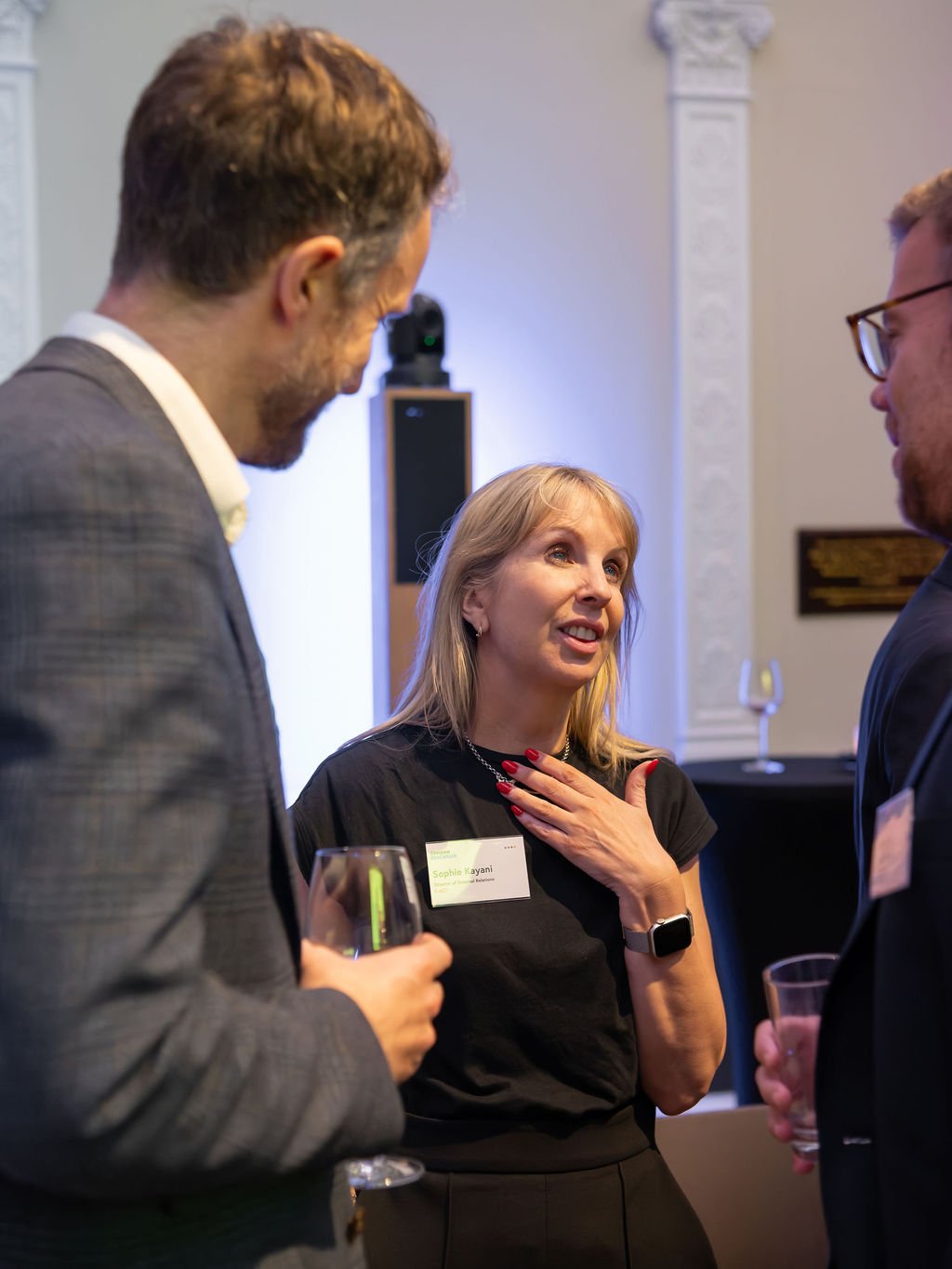
Sophie Kayani: I'm from E-ACT. We serve 25,000 children, as far north as Oldham and as far south as Brixton, as well as Bristol and Birmingham. We serve really deprived communities, so I understand everyone's arguments this evening. But what are we doing to reach the most disadvantaged? I think all of us in the room need to consider that. We can talk about outcomes, what they might look like and how we reach those pathways, but essentially many of my children are not afforded the opportunities they would have in the independent sector. So how do we make that equitable?
Peter Hyman: I served a community in Newham that faced a lot of challenges, although I don't like to call it deprived, because it had a lot of strengths. I think the whole idea of Human Maxxing starts with having those children in mind. That's why I described some of the stories from School 21, because I think those who grow up in the poorest families most need Human Maxxing, because it equips them more fully. This is where I go back to the point about hothousing: if you just hothouse them and give them the passport, they have less of the social capital and those other skills, and when they're out in the world they find it really difficult. So I think breadth matters most for them, and our students really responded to it. I've started speaking to some of my first cohort, the ones I talked about in that assembly, now that they're 25. So I think what you're saying is really, really important.
Jon Hutchinson: Building on the equity point: your case against credentialism, and for alternative qualifications, was quite compelling. But from an equity point of view, for children from disadvantaged backgrounds, alternative qualifications like the EPQ, or extended coursework, are more easily gained the more resources you have. It sounds like you're advocating a move towards that kind of system. Are you concerned that if we did, those who already have the most would be the best placed to gain more?
Peter Hyman: It is a worry. You've got to have ways of assessing it that show progression, taking into account where a child has come from as well as what they're trying to achieve. So there is that danger. But I've done the EPQ many times in state schools, in some of the areas we've discussed, and in my experience you can get young people to that level whatever their background. I'm not arguing for a wholesale move in that direction. I just think we need a bigger variety of exams and assessment methods. I think there should be more oral exams. You could say that favours children from middle-class families. Again, my experience is that it doesn't, because the depth of a lot of young people's answers, and the depth with which they talk about their learning, is often even more powerful if they've faced more barriers and difficulties.
Will le Fleming: I'm involved in setting up a new school that has triple-tier project qualifications, from age three to sixth form, based on majors and minors, with thinkers and doers combined. So we're very much drinking the same Kool-Aid. My question comes back to your political experience, where Anthony started us. Watching the politicians, is it more likely that we'll get them to cohere around Tomlinson, with someone actually taking a grip of this and stopping the tinkering and the crowd-pleasing? Or is it more likely that you'll persuade politicians to free institutions to do what we're trying to do, what School 21 is doing, and what many leaders in this room are doing with their institutions? Will change come through a visionary central point, or is there any possibility that we can simply give more freedom and autonomy to the system and see these ideas put into practice regularly?
Peter Hyman: I think there'll be a lot more freedom and autonomy over time. I think there'll be a lot more devolution, which is interesting, and I don't quite know where it will lead, but I think mayors will be given a lot more powers. That will be important, because it will be linked more to what's going on locally, including local jobs and industries. I think that will have a really big effect, so I'm optimistic about it.
Walter Kerr: You started with a story, so I'm going to quickly tell you the story of a mentee of mine. He was at Kensington Aldridge Academy; we'll call him Adam. I worked with him from 16. He was taught to get good A levels, he got good A levels, and he went off to university. He dropped out after two years, saddled with debt: the story we hear time and time again. I then saw him in a very good job working in a burrito restaurant. He then quit. He represents the broken social contract between education and employment. I know this is central to the Milburn report and the recommendations coming in the next month. We have some press in the room. I'd love an exclusive on some of the recommendations and initiatives you'll be putting forward. Can I tempt you?
Peter Hyman: You can't tempt me too much, because Alan Milburn, who's running the review, would give me a very bad time. But for those who are interested and have read the interim report, the direction of travel is clear. There needs to be a better service for young people at every stage, because it's those key transitions that matter, as in the example you gave. There's a lot to learn from the Netherlands, where both Alan and I have been, about having an adult at the key moments who then sticks with you, even while you're at university or college and for your first six months in work, so that you don't get overwhelmed and you don't drop out. I think that's really important.
Jonny Uttley: I was a secondary headteacher for five years and a multi-academy trust CEO for eight. I started off as a TA and trained as a history teacher. You've talked tonight about being at A and wanting to get to B. Andy Burnham has been very critical of 40 years of neoliberal policy, and has talked about rewiring the state. I work all the time now with school leaders in the state sector who are crippled by fear of Ofsted and school league tables. You talked about comparable outcomes. We have comparable outcomes for schools: with Progress 8, for one school to get better, another has to get worse. And the best way to maximise Progress 8 is to have a very narrow curriculum and to suspend and exclude high numbers of children. Ofsted don't care about that. So we've had 40 years of a marketised system. Do you sense a willingness centrally to rewire education, to accept that 40 years of marketised education has done as much good as it's going to do, and to create an infrastructure that allows high levels of collaboration within the state sector and between the state and independent sectors? Because that's the way to get us to B.
Peter Hyman: I'm very sympathetic to all of that. Opponents will say that anything in this area lowers standards, so we've got to take that on, both by broadening what we mean by standards and by retaining the backstops we need where intervention is required. But basically this is an argument that needs to be made, and, as the other questioner said, we need more freedom for schools so that they can do it. We also need to ensure that there are standards, and that we don't throw out some of the important gains of the last 20 years that really do matter.
Joe Seddon: I run a company called Zero Gravity, which was one of the companies chosen by the UK government to pilot rolling out AI tutors in the state sector. What strikes me is that there's a lot of early evidence from these products that they can be built in a Human Maxxing way that increases students' attainment. I'm very bullish that the cost of hyper-personalised, adaptive tuition will fall from what is currently a £50-an-hour industry to something that costs pennies. But inevitably, students in the private sector will get access to this technology much more quickly than those in the state sector, because market forces will push private schools to reinvent the way they work. You can already see that with Alpha Schools in the US. So my question is: how activist should the state be in pushing schools to put AI in the classroom? Should we see hypothecated budgets for schools to invest in this? Should schools be mandated to put AI in the curriculum? Or should we take an organic, market-based approach and trust that if the technology is good enough, state schools will want to adopt it because the incentives are already there?
Peter Hyman: At the risk of repeating myself, the state should be very active, but it should also be measured. As I said in my talk, we've got to be clear about what AI is good for. It's not about outsourcing your mind; it's about personalised help with specific things. That doesn't change the fact, as I also said, that every student needs to learn the strengths and weaknesses of AI and not use it as a shortcut for everything, which is obviously what a lot of young people are doing with homework. The young people I've spoken to specifically about this know the dangers. They're very thoughtful about how it short-circuits thinking in some respects and about needing to retain the process of learning, so they're actually very wary of it. But the short answer is that we've got to organise this properly, and the state must organise it properly.
Dr Lindsey MacDonald: I was really struck by your description at the beginning of how School 21 wasn't like a school. You've touched on a few different aspects, such as playing fields and theatres, and I suppose those liminal spaces outside the classroom. Having worked in youth employment charities and now leading Magic Breakfast, I understand those kinds of spaces outside the classroom and the power they can have. What are your thoughts on what the school building looks like in your B system, and what kind of capital investment is needed to help realise and maximise Human Maxxing?
Peter Hyman: Well, it's a time of great fiscal constraint, but one of my great passions is this: since 1979, education spending has basically gone down slightly, at a time when health spending has almost doubled. We haven't invested in education in the way we need to. It was 5% in 1979 and it's 4.7% today, so this really matters. We need that investment, and not just for the government's promises on technical education. You're not going to have the same FE facilities in every school, but if you're going to do the joint pathway, the schools that aren't near an FE college need their facilities built up. And in terms of enrichment, we've hollowed out youth clubs and youth spaces by 70% in the last 15 years. 70%. So we need to build up those third spaces in really powerful ways. I'm totally with you on that.
“Well, if you judge the success of a talk by the quantity and calibre of the questions, then Peter, it’s an A* for you.”
“And an A* for them!”