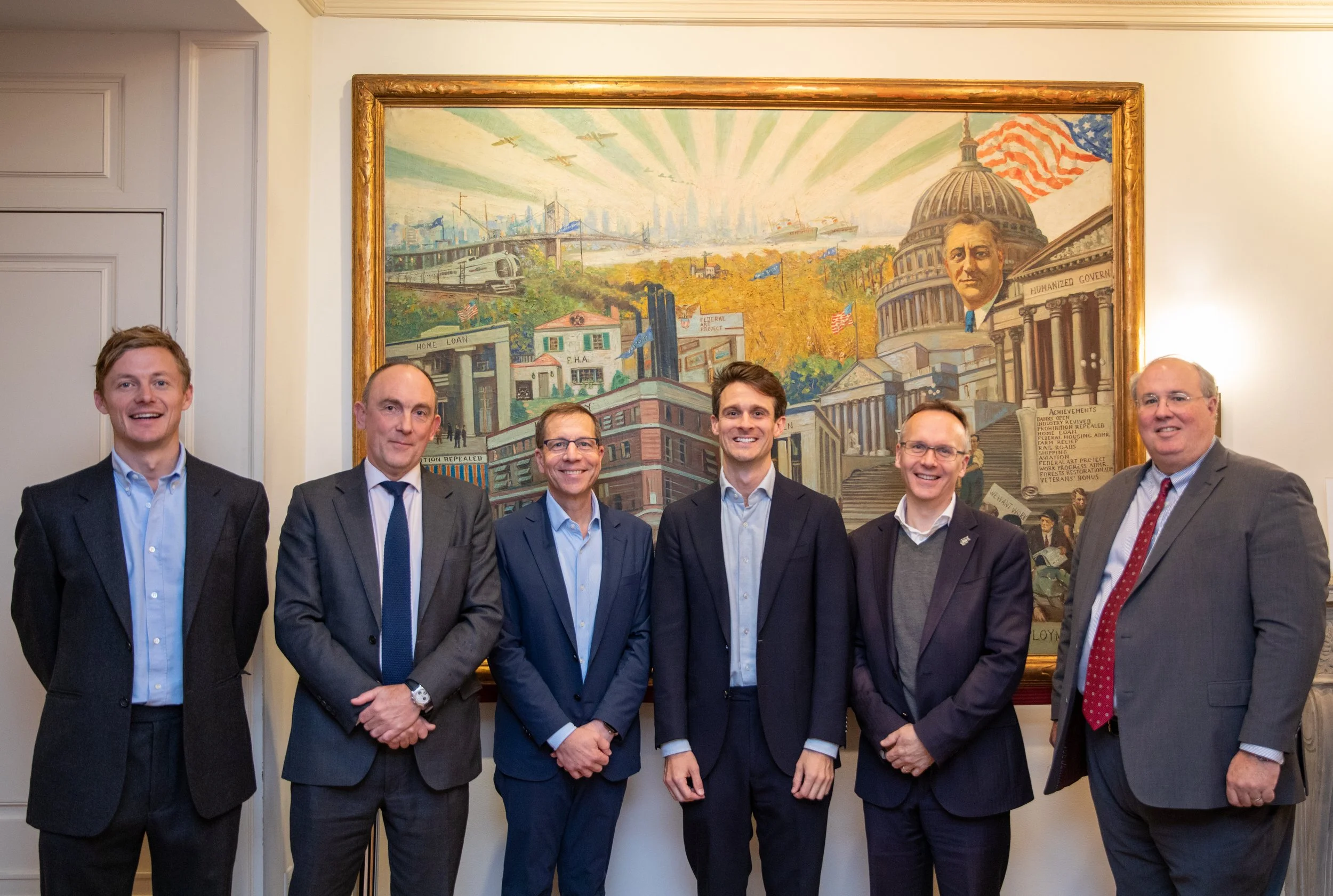
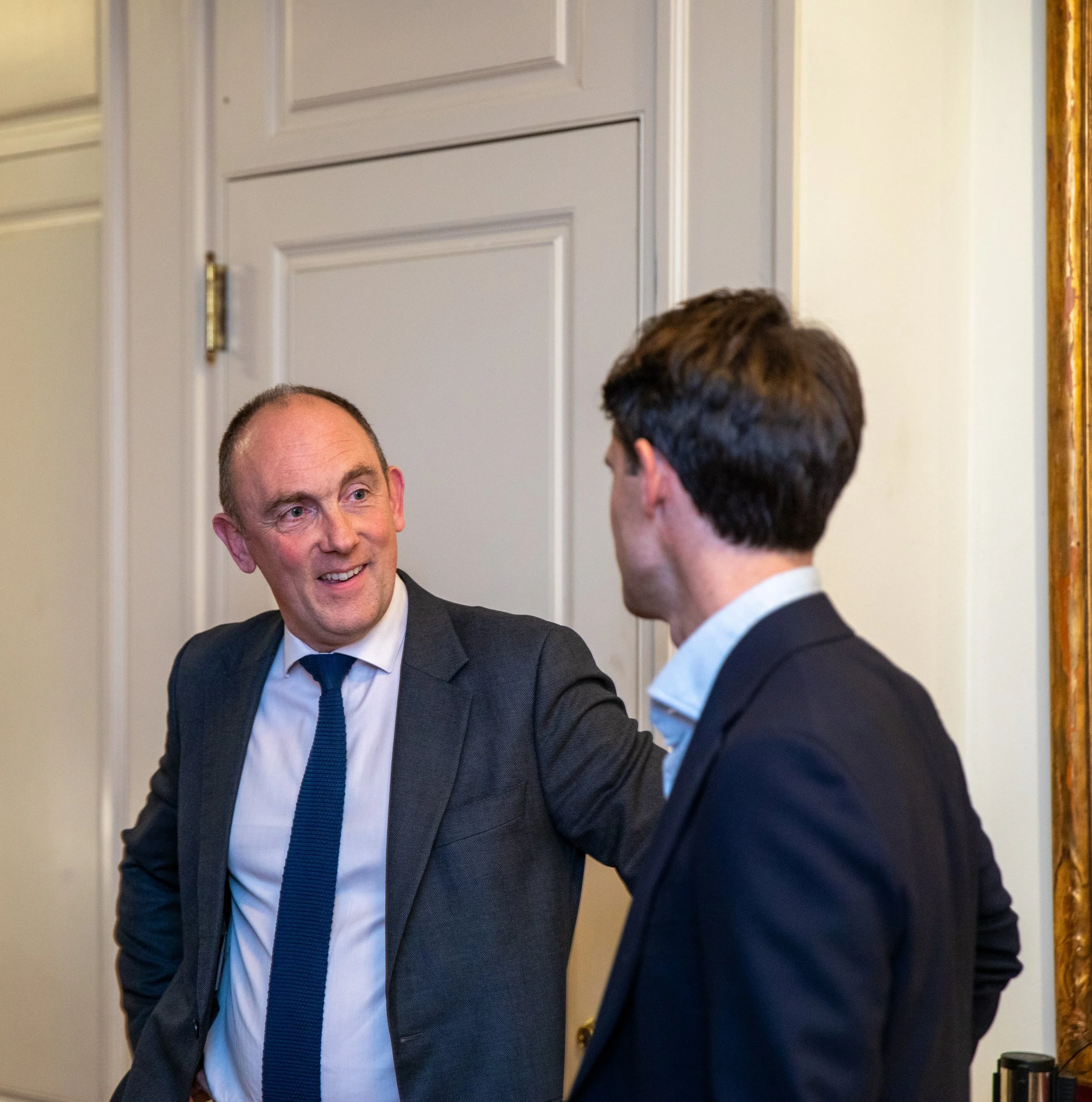
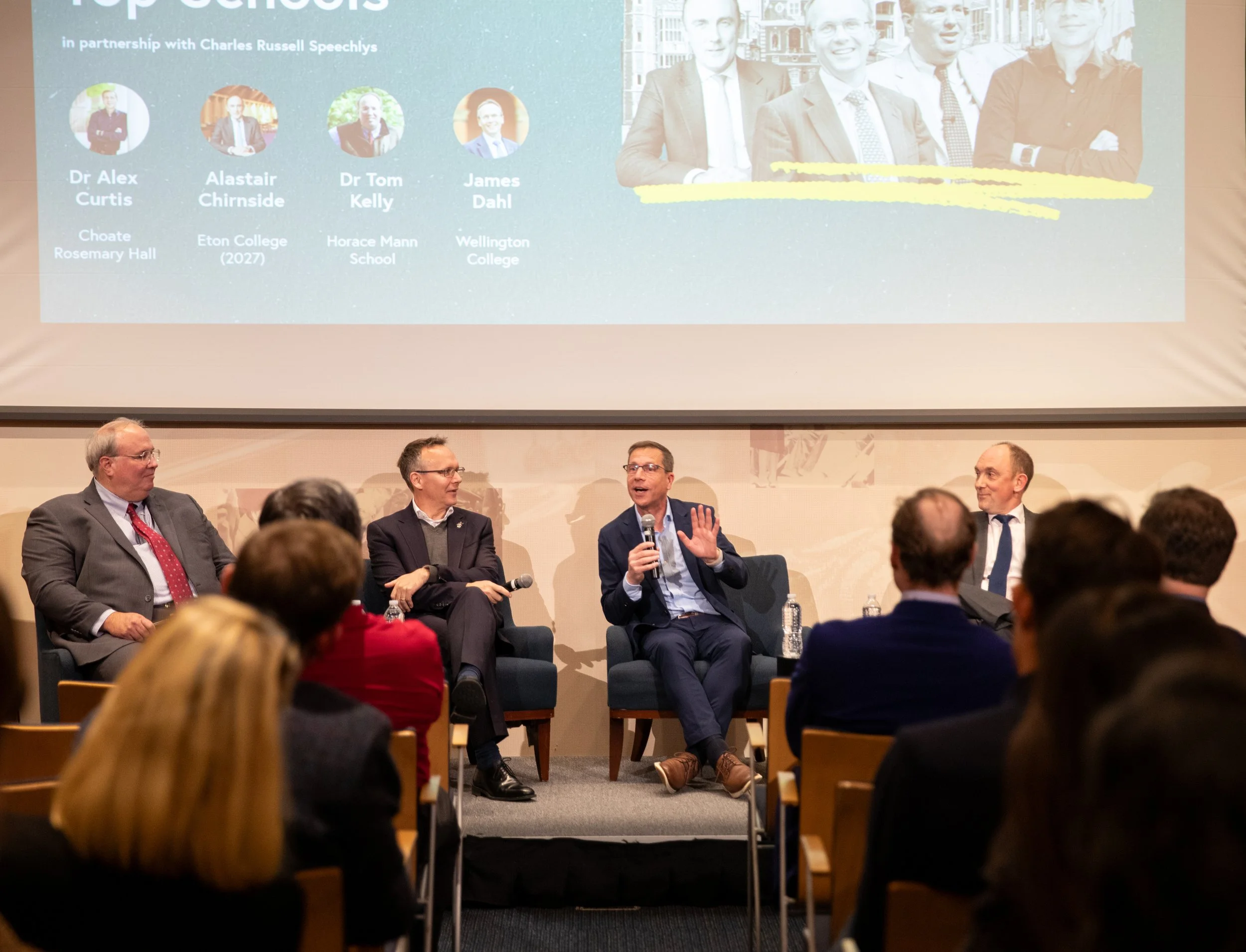
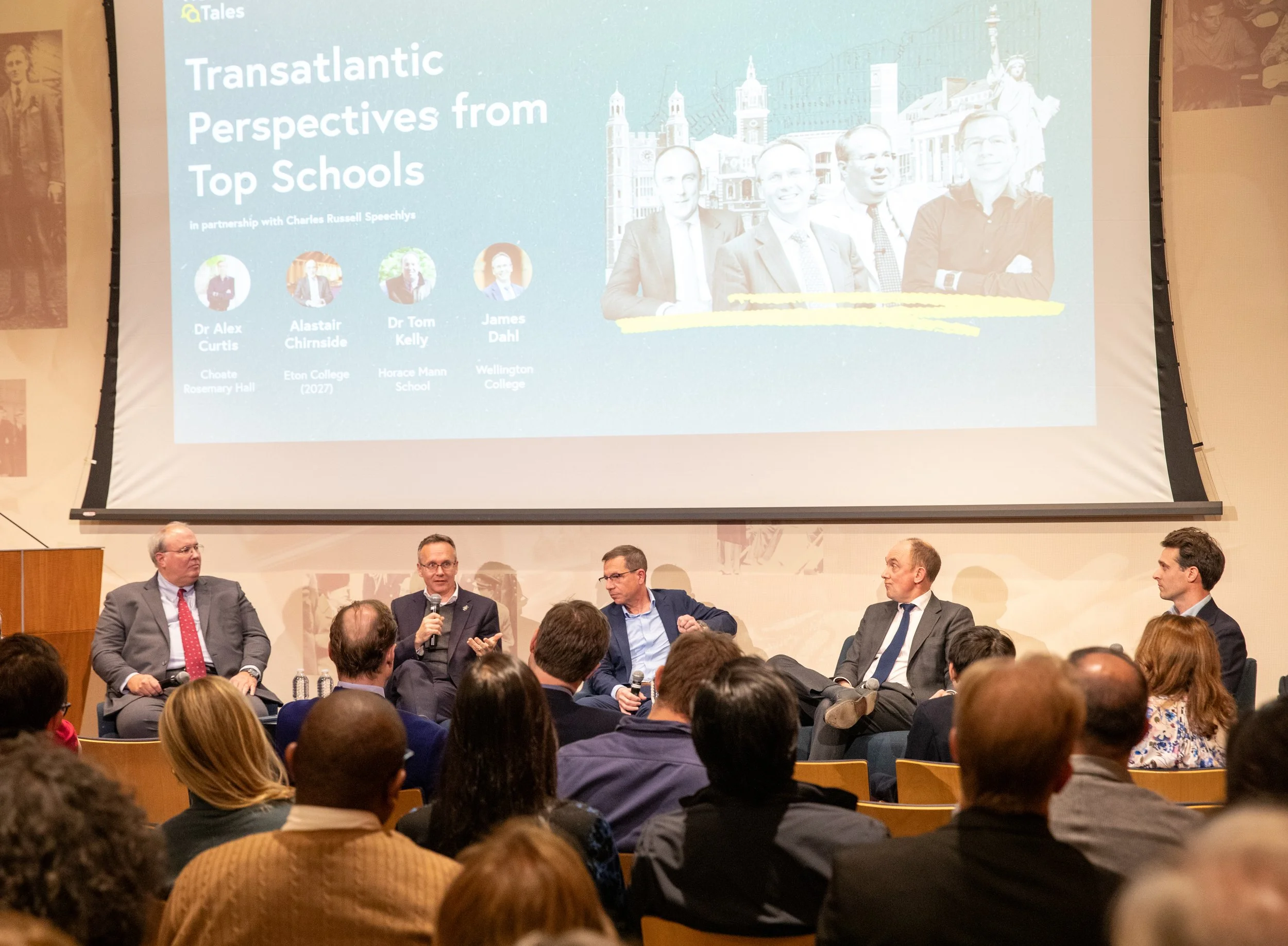
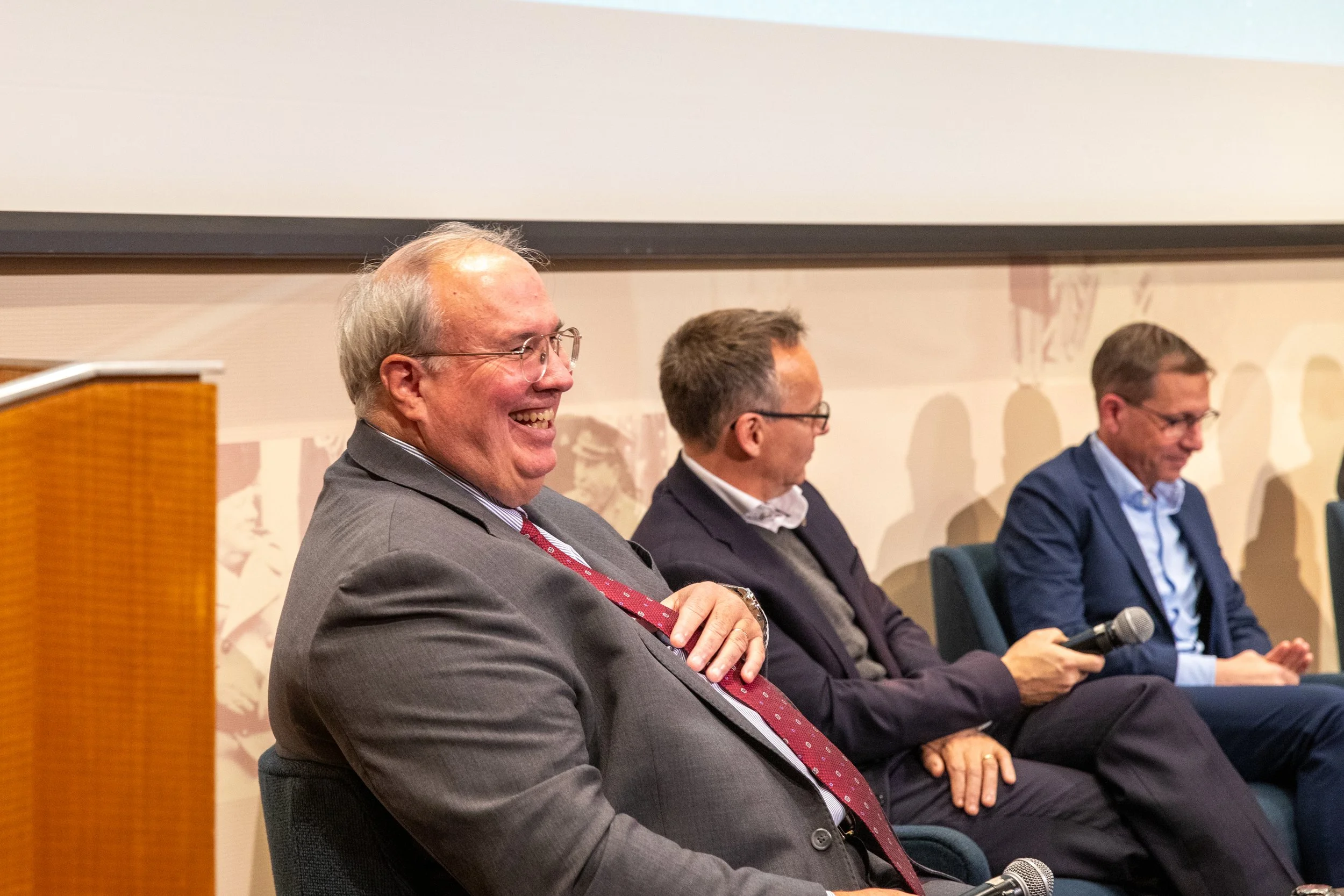
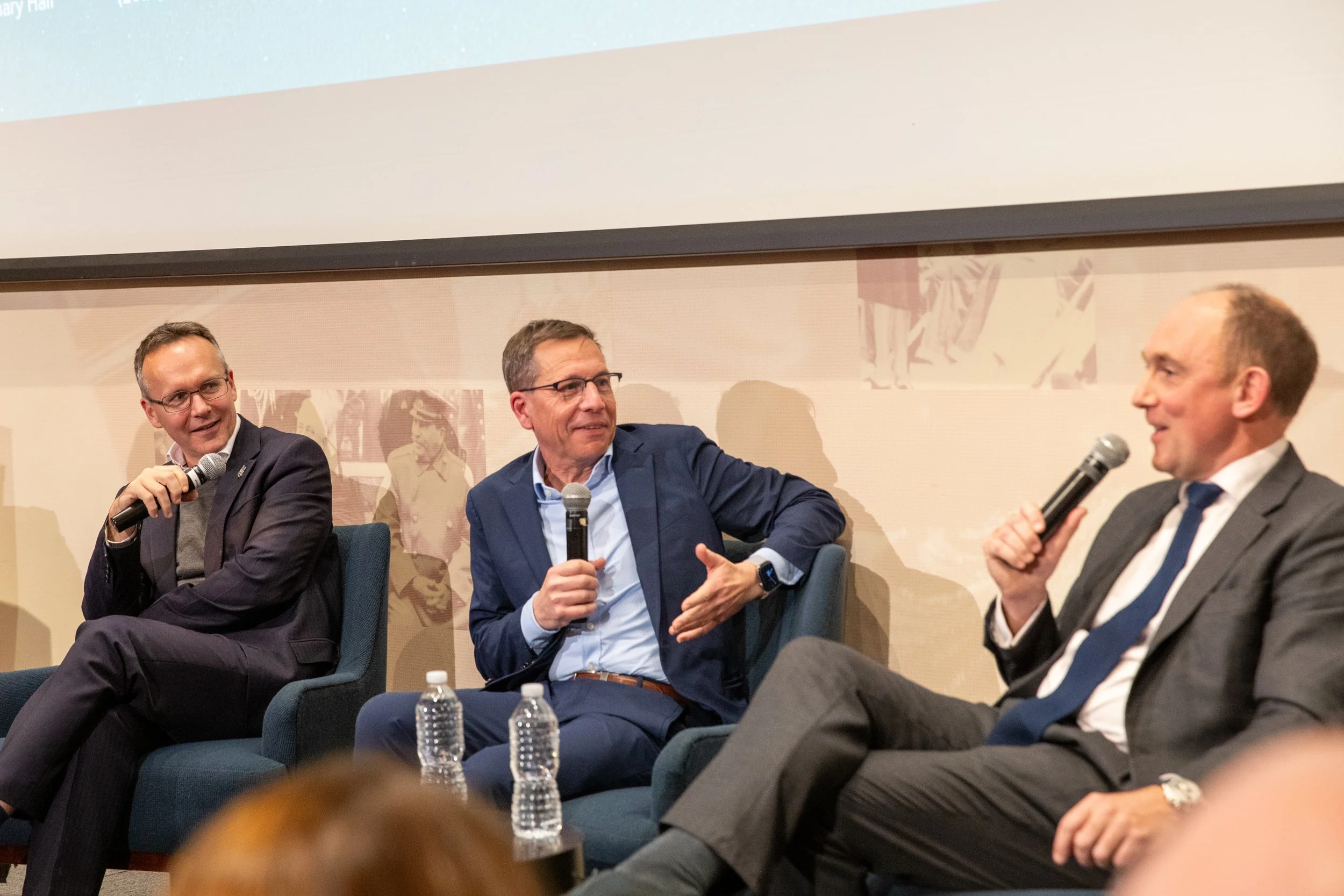
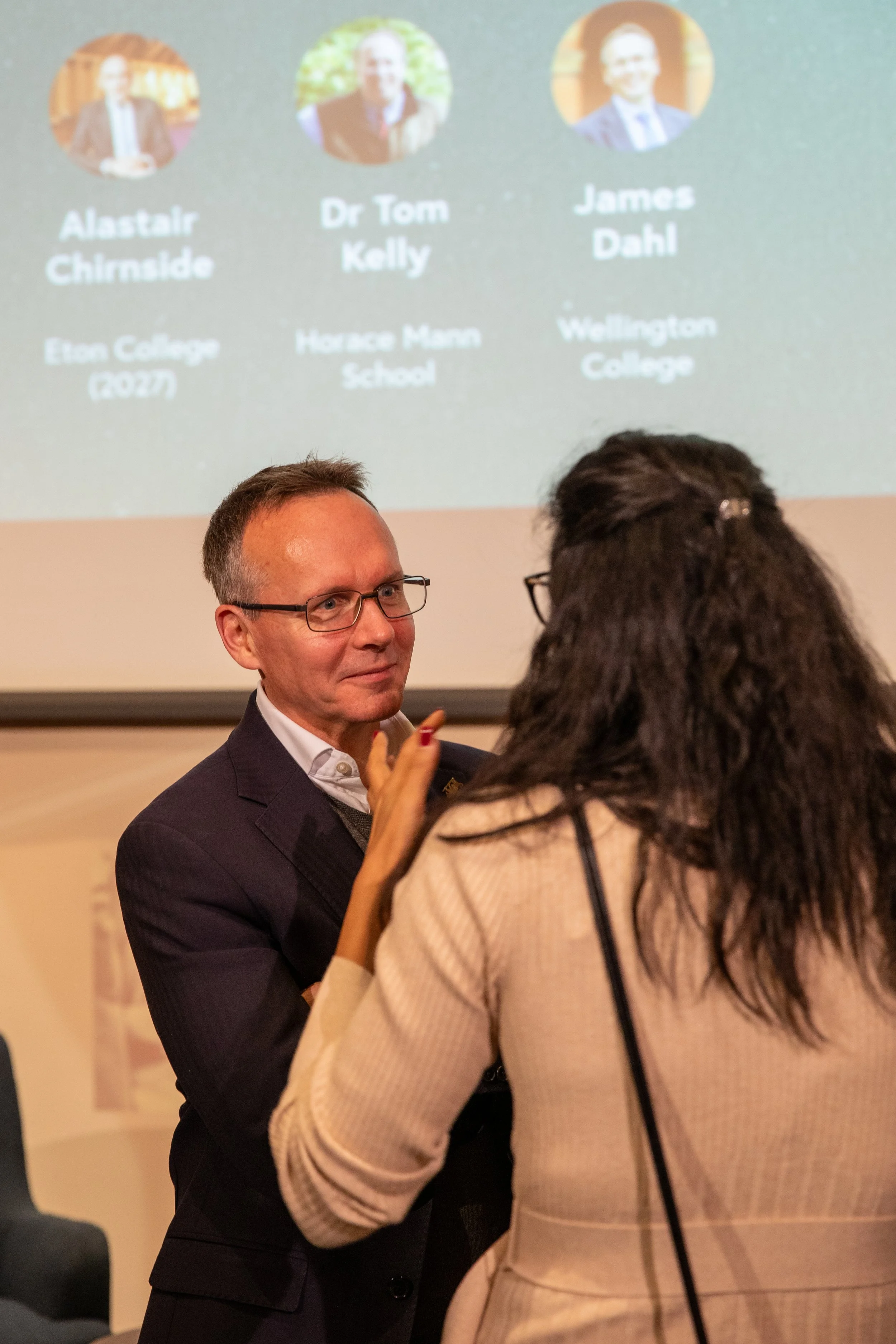
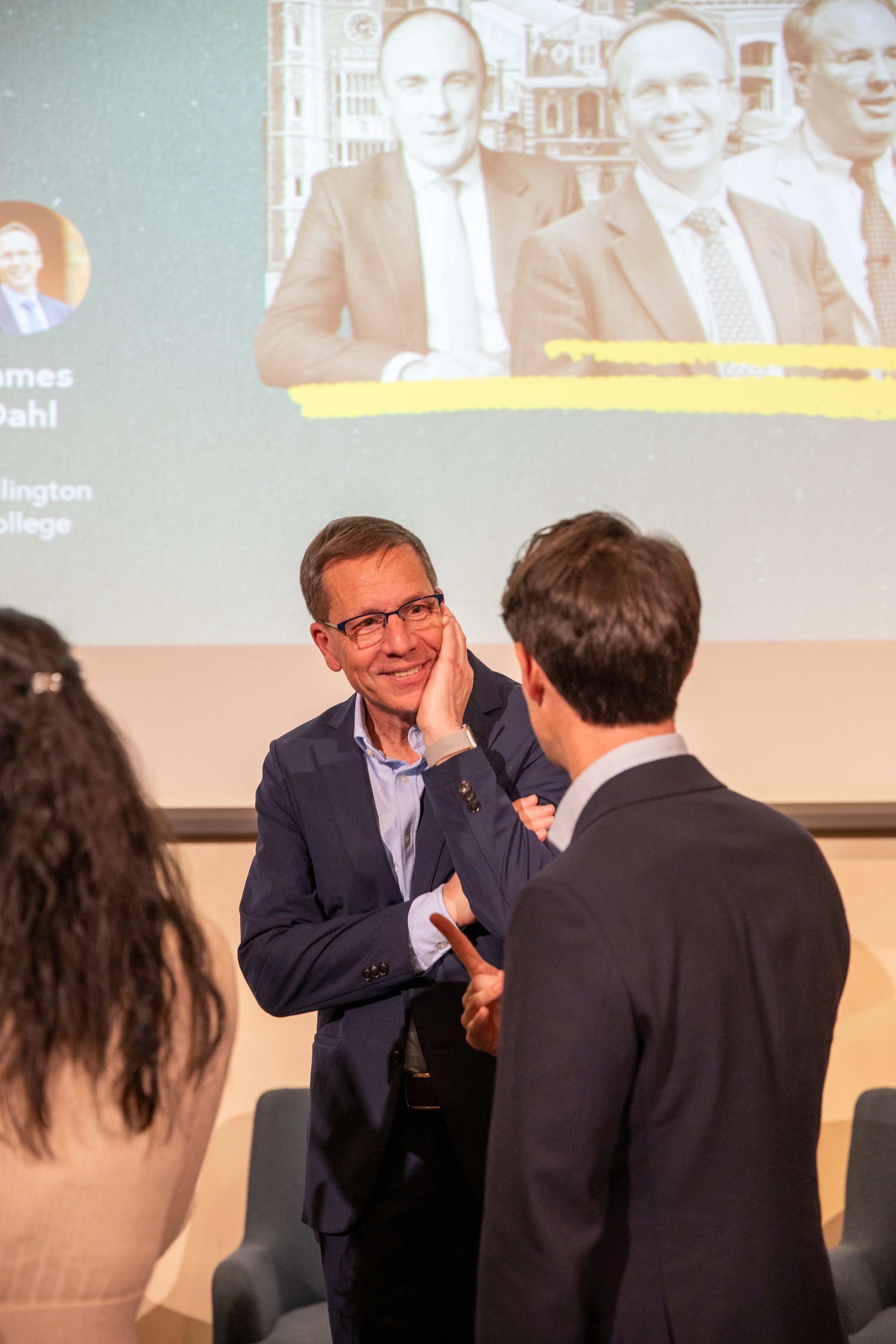
On 16 November, our autumn Heads & Tales Live series reached its final stop: New York City. Oppidan co-founder Henry Faber hosted four heads of schools from the US and UK to share transatlantic perspectives on what makes a truly great education.
We were joined by Dr. Alex Curtis, Head of School at Choate Rosemary Hall, Dr. Tom Kelly, Head of School at Horace Mann, Alastair Chirnside, incoming Head Master of Eton College, and James Dahl, Master of Wellington College. For those who couldn't be there, here's a summary of the main learnings.
What the US and UK each do best
The conversation opened with the differences in education culture. On arriving in the US, Alex noticed that students were less practised at writing specifically and concisely, and he sees close work with specific material as a real strength of the UK approach. Alastair admires the freedom American teachers have to explore topics without being tied to a narrow assessment framework, and feels the US system puts less pressure on students at a formative age.
Funding models in the two countries are very different. Does it matter?
At Choate, tuition covers 56% of the cost of a child's education, with the rest coming from the endowment and fundraising. Alex described how this cultural difference creates opportunities for access, but also "incredible responsibility" to use funds carefully. In the UK, James pointed out, parents’ fees cover 100% of the cost, supplemented by commercial activity.
Tom reflected on 22 years as head of school at Horace Mann. Community trust and communication have changed, and undesignated giving has shifted the nature of fundraising, since it rests on families trusting schools to spend wisely. He noted that many of the jobs the class of 2027 will do may not exist yet, so schools need the flexibility to adapt and grow.
Alastair thinks the dial is moving in the UK, with more people looking to American schools as a model. Strengthening education takes financial resources, he said, and he sees the culture shifting towards supporting it, much as successful individuals in the US already treat educational institutions as places to donate and make a difference.
How the parent-school relationship has changed
James felt that, since Covid, "the rug has been pulled out" between parents and schools. Parents are more willing to move children around and trust schools less, so it falls to schools to build better relationships. His ideal is a triangle of pupil, parents and school; and when communication is strong on all three sides, it is the most rewarding place to work.
Alastair's advice to parents: engage early and often. “No child gets that school year back," so the sooner a school hears something isn’t right with a child’s experience, the sooner it can fix it.
AI: Is homework dead?
Tom sees the rise of AI as a chance for teachers to show how much more they do than a machine. "AI doesn’t fear me as an adult, but AI would fear me as a student who has yet to develop the critical thinking, the analytical skills, to experience the world in an unbiased way...but it’s a set of literacy skills now." It's a language that isn't going away, he said, and the real question is how we use it to make the world a better place.
Asked how a curriculum can balance the classics with emerging technology, James said schools prepare young people for the world as it will be, so, used strategically and ethically, technology can enrich learning. But "we can't put the genie back in the bottle," and it would be detrimental for students to "outsource the hard thinking to a computer."
Tom added that the disappointment lies in schools where technology is a substitute. He emphasized how AI won't replace what schools do best: raising kids who think nimbly and freely, and who can have difficult conversations "nose-to-nose, not online." Alex's approach is to hold opposites in mind, pairing the most traditional content with the most forward-thinking technology. "The answer to all these questions is flexibility in education, and not getting stuck on one size fits all."
Preparing teenagers for life after graduation
Alastair believes schools can always do more to prepare students for the future, but human skills will always matter. Whatever AI can do, people will want to work with other people, and those who can do so effectively will prosper. Schools should teach children how AI tools work and, to a degree, how to use them. He also pointed to boarding, which has been out of favour in the UK but is gradually returning, partly because of the controlled environment it gives schools.
James described a programme that began by supporting low-income students up to the age of 25 and now covers every student, with work experience and alumni connections as a reminder of the network that has their back. He recalled a former governor who said, "I don't care what A level assessments they get; I want to know what they are like when they are 45." What matters is whether they are good leaders and reliable, active members of their community, "because that is the badge of a good education."
What parents should ask, and the non-negotiables
Alastair stressed that unstructured time matters just as much to learning. When looking at a curriculum, parents should ask how much flexibility it offers: is there choice and agency, or is it one size fits all?
Alex wants students to leave as great writers, researchers, and active listeners. Tom explained that when he started, very few Horace Mann students came from the Bronx, where the school sits. After implementing an accessibility initiative to change this, his aim is now simple: "We want you to come and we don't want you to feel like you're a guest."
James's non-negotiables: aspiration and high standards, a real belief in young people that shows up in relationships with staff, and kindness and fun on campus.
What's next
New York City was the final stop of this year's Heads & Tales Live series. We're very grateful to our panellists, parents, and educators who joined us in each city. The 2027 series will be our biggest yet, so keep an eye out for the full line-up of cities and panels, coming soon.