
What do teens think of the social media ban?
By Jasper, 16-year-old student
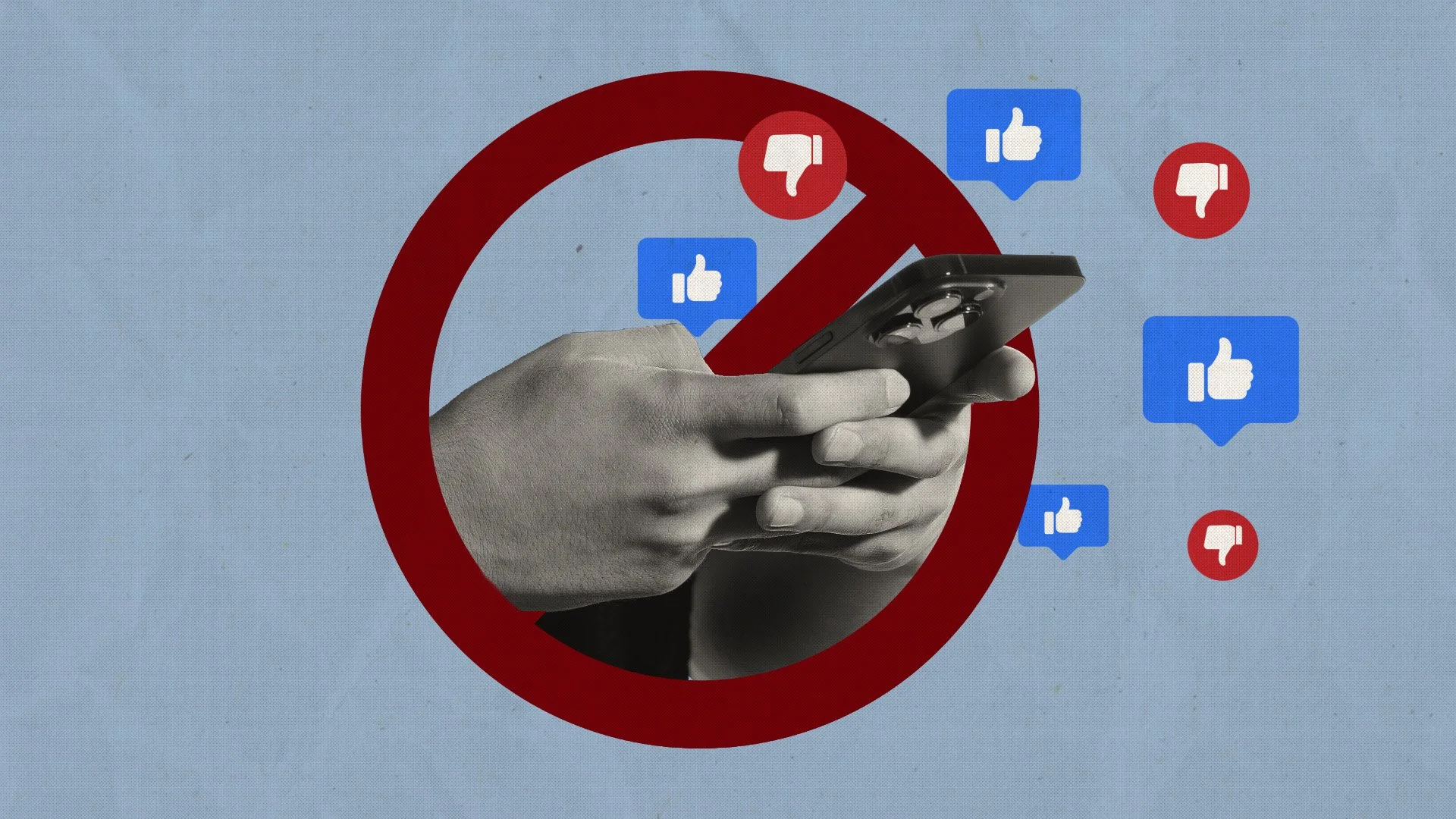
By spring 2027, anyone under 16 in the UK won't be able to use TikTok, Instagram, Snapchat or YouTube.
I'm 16, and these four apps are basically the backbone of my every day. My view is that the ban is the right instinct, but the plan is only half-cooked. The other half is the part almost nobody's talking about, and it's the part that matters most.
What the ban gets right
According to the government's consultation, more than 116,000 people responded and around 90% of parents backed an under-16 social media ban. The worries behind those numbers are fully justified. I've had things show up on my feed at 1am that I wasn't looking for and definitely wasn't ready for, and I know I'm not the only one. Social media can expose younger children to:
bullying and body-image pressure
content they aren't ready for
adults who shouldn't be near them
Campaigners like Ellen Roome and Esther Ghey both lost children to the harms of the murky world of social media. Their stories are part of why parents have pushed so hard. Of course for some people, these apps can feel genuinely addictive – and that’s no accident. Every ‘like’ and refresh delivers a hit of dopamine, and the endless scrolling is designed to keep you there. So when people my age struggle to put their phones down, it isn't simply addiction, it's the product working as it has been designed to do.
What the ban misses
Strip everything back, and the real problem is boredom. The phone has become the default answer to every quiet moment. Take mine away and I genuinely don't know what to do with my hands. Take the phone away and there's nothing left to fill the gap it leaves behind. One girl interviewed by the BBC said she would just "stare at a wall" without her phone. Funnily enough, I sort of get it. My generation was taught to reach for a screen as reflex, and nobody really taught us what to reach for instead.
The evidence is humbling:
There's little proof that bans alone make children's lives better
In Australia, around 7 in 10 parents said their child still had an account on a restricted platform months later after their ban
Numbers like that stick with me. It’s as if the apps aren't really the problem; the boredom underneath them is, and a ban on its own doesn't touch that. A ban clearly isn't the lasting solution.
What I believe should happen
Boredom is replaceable. A phone can be swapped for a football, a club, a job or a friend.
Encouragingly, the government has announced a £132.5m "Every Child Can" programme funding sport, art and nature as alternatives to scrolling. It’s definitely the right idea and it needs to be done everywhere, not just in places that already have the clubs and coaches to run them.
I found out how much this matters during exams. I started leaving my phone in another room while I worked, only checking it on breaks. The first ten minutes without it were rough; my hand kept twitching towards a pocket that had nothing in it. Then something shifted. An hour would go by and I'd realise I hadn't thought about my phone once. I got more done and felt far less distracted, and the difference genuinely surprised me.
When left to myself during the holidays, I could easily have stayed in and scrolled, and some days I did. But my parents kept gently pushing me outside. That nudging got me seeing friends, meeting new ones and making some of the best memories of the year, none of which I'd have if I'd just stayed in.
That's the part decision makers need to take seriously. To headteachers, employers, clubs and parents: the ban is the easy part. The hard bit is building the alternatives.
If you're wondering where to start, pick one or two of these:
Join an activity with a fixed time and place
Pick up something you can slowly get good at like an instrument or cooking
See your friends in person instead of messaging them
Keep your phone out of your room when you need to focus and at night
Ask for help if you can't stop!
And to parents: don't just take the phone away and call it done. Drive them to the club, push them out the door. We're far more likely to follow you into a better habit than to be ordered into one. Gentle nudging makes all the difference.
Final thoughts
I support the intent behind the ban. The harm is real, and acting on the evidence was the right thing to do. I think the version of me who spends more time outside and less time glued to his phone will end up thanking the one writing this. The ban is just the starting point. Let's build the things worth doing instead. It could be one of the best decisions we've made for my generation and future ones.