Warwick Schools Foundation
This year, 77 pupils took part in a cross-school mentoring programme between Warwick Schools Foundation’s independent and state schools.
Year 12 mentors from King’s High School and The Kingsley School were paired with Year 6 pupils from Clapham Terrace Primary and Westgate Primary - two state schools within the Foundation’s Multi-Academy Trust - for bi-weekly 1:1 sessions focused on character, oracy and readiness for the transition to secondary school.
“Enabling transformation through the power of education.”
Background
Young people from backgrounds of deprivation often face systematic barriers in accessing higher-performing schools and opportunities - a gap highlighted in the Sutton Trust’s report Closing the Regional Attainment Gap (February 2019).
Warwick Schools Foundation designed this programme as a direct response: a partnership between sixth-form pupils at its fee-paying schools and Year 6 pupils at the state primaries within its Multi-Academy Trust. The aim was to develop character, oracy and readiness for key transitions - the ingredients that shape social mobility outcomes.
It builds on an existing in-schools volunteering programme, with Oppidan’s mentoring framework giving it structure, progression and a clear set of shared objectives across the four participating schools.
How the programme worked
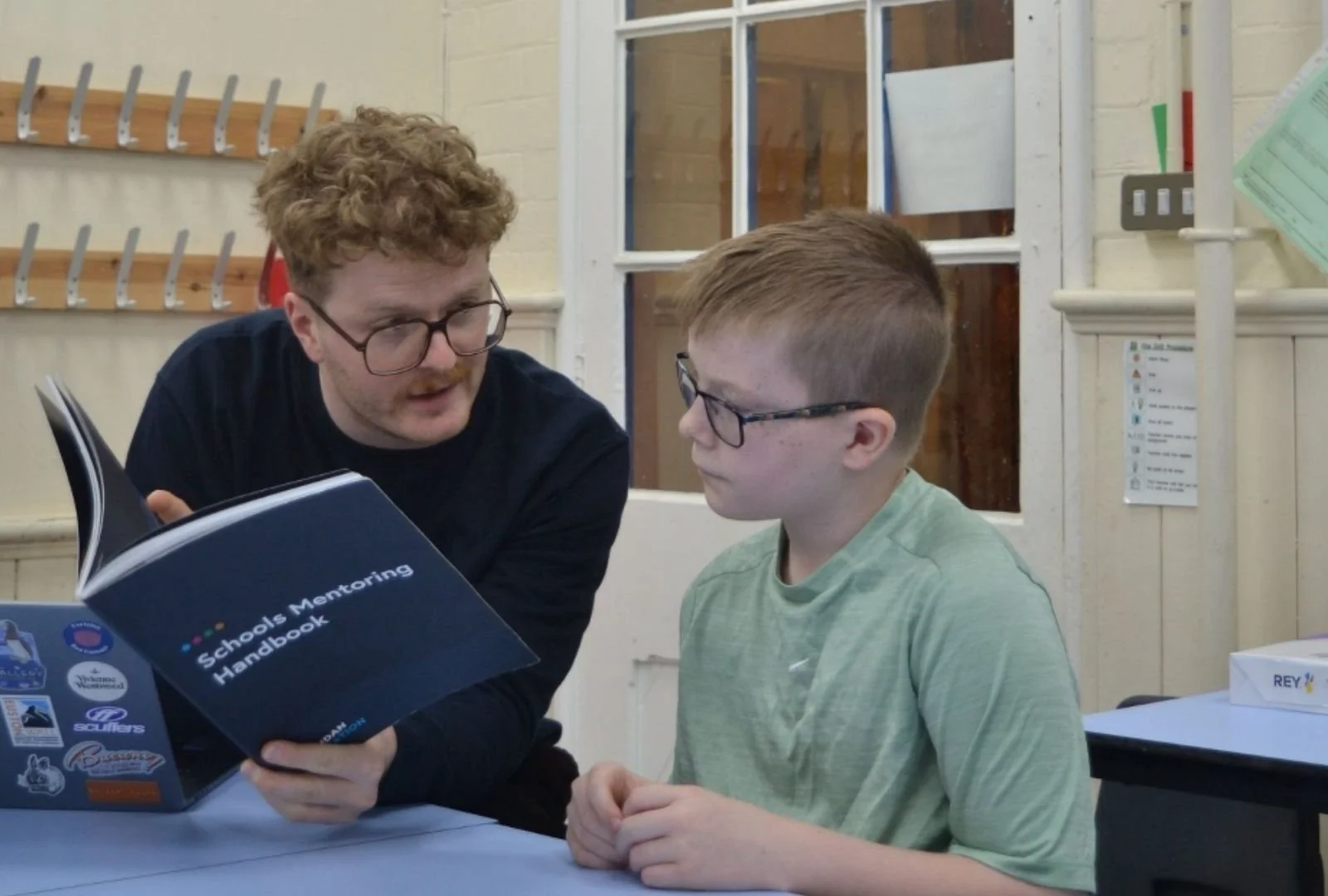
Each Year 12 mentor was matched with three to four Year 6 mentees for bi-weekly sessions of around 20 minutes. Mentoring took place inside the primary schools, so mentees felt at ease in a familiar environment.
Every pupil received a mentoring booklet developed by Warwick Schools Foundation, drawing on the Oppidan principles of character, oracy and self-reflection, alongside the Oppidan Mentoring Handbook and the Education Endowment Foundation’s mentoring guidelines.
Sessions were anchored around goal-setting. Pupils got to know their mentor, set personal objectives and discussed the move from Key Stage 2 to Key Stage 3 - drawing directly on the mentors’ own experience of that transition. Progress was pupil-led; milestones came at each child’s pace.
Complementing the 1:1 work, the Foundation ran joint assemblies bringing senior and primary pupils together. These gave mentors a platform to share what the experience had meant to them, and built a wider sense of belonging across the cohort.
Pupil voice
Over the course of the programme, 77 pupils met for structured peer-to-peer support. The voices below - drawn from Westgate Primary, Clapham Terrace Primary and both senior schools - capture what the experience meant in practice.
“My mentor comes on Fridays and listens to me. Together we make a plan, and since sharing time together we’ve set targets around my rugby and sports.”
Year 6 pupil, Clapham Terrace Primary School
“Oppidan were easy to relate to. I love working with the girls from King’s High School - I can talk openly with my student.”
Year 6 pupil, Westgate Primary School
“My student helped as I am going to King’s High in September. When I didn’t know whether I would be going to King’s, she found out about Stratford Grammar School for me from her friends who go there.”
Year 6 pupil, Westgate Primary School
Mentor voice
For the Year 12 mentors, the programme was equally formative - sharpening leadership, communication and self-awareness as they prepare for university or employment.
“You feel like you are making a real difference. With one of my mentors, they became more confident the more we got to know each other.”
Year 12 mentor, The Kingsley School
“It feels really good to help the primary school pupils. In turn, I ended up learning a lot myself.”
Year 12 mentor, The Kingsley School
“Mentoring helped me think about what my next steps are - planning for university.”
Year 12 mentor, King’s High School
“The workshop we did at the start of mentoring helped to give me confidence, knowing I had the tools to support the primary pupils.”
Year 12 mentor, King’s High School
Outcomes
Mentors developed the leadership, communication and reflective skills needed for the transition to higher education or employment. Mentees gained a trusted voice who had recently made the move to secondary school - an insider’s view of the expectations, routines and culture ahead of them.
Four Westgate Primary pupils will be joining King’s High School in 2026/2027 - a direct, measurable outcome of the relationships and conversations built during the programme.
In summary
The programme has established mentoring across WSF and its Multi-Academy Trust schools, drawing on both internal teaching expertise and Oppidan’s mentoring resources. By building on an existing volunteering partnership, the Foundation has narrowed the attainment gap and equipped pupils with the leadership, communication and character traits to navigate a pivotal crossroads in their education.
The Oppidan Mentoring Handbook and the Oppidan Parent Pupil Handbook were central to making this programme viable - and to making it sustainable for future cohorts.